
Indie & Literary 7 min read
Maus
Written by Art Spiegelman · 1986
4.8
Art Spiegelman's Pulitzer Prize-winning graphic memoir tells his father's Holocaust survival story with Jews drawn as mice, Nazis as cats.

Amazon Associate link
Written by Neil Gaiman · Art bySam Kieth
DC Comics (Vertigo) · Trade Paperback · 1989
An occultist trying to trap Death to bargain for eternal life catches her younger brother Dream instead, and holds him prisoner for over 70 years. When Dream finally escapes in the present day, weakened and stripped of his tools of power, he sets out to recover them one by one — a quest that pulls him through Hell, an asylum, and the fringes of the DC universe. It’s the opening chapter of one of the most acclaimed comics series ever published, though even its own fans generally agree it takes a volume or two to hit its stride.
Preludes & Nocturnes started as a horror title and still carries that DNA — dream demons, serial killers, a nightmarish asylum — but Gaiman uses the genre as scaffolding for something stranger and more mythic. By the final chapter, “The Sound of Her Wings,” the tone shifts entirely, introducing Dream’s older sister Death and revealing the emotional register the series would spend the next seven years perfecting.
Unlike most comics leads, Dream (also called Morpheus) is aloof, often unlikeable, and defined as much by what he refuses to feel as by what he does. Watching a story built around a protagonist who barely seems to want your sympathy — and slowly earning it anyway — is a large part of what makes the series distinctive.
Sandman helped define the Vertigo imprint and, with it, a whole generation of “literary” comics that treated myth, folklore, and the fantastic as material for adult fiction rather than children’s entertainment. Its influence runs through everything from modern urban fantasy novels to the Netflix adaptation released decades later.
The Sandman was written by Neil Gaiman, with the first five issues illustrated by Sam Kieth before he left the series; Mike Dringenberg took over as principal artist, with Malcolm Jones III inking and Robbie Busch on colors. Issues #1–8 were originally published by DC Comics between January and August 1989, and later collected as this first trade paperback. In a 1991 afterword to this collection, Gaiman admitted that rereading the early issues, he found many of them “awkward and ungainly, although even the clumsiest of them has something” worth keeping — a rare, candid admission from the writer himself about a project now considered a landmark.
This is the correct starting point for the Sandman series, but go in with calibrated expectations: most longtime readers consider the back half of this collection — especially “The Sound of Her Wings” — a much stronger indicator of what the series becomes than the earlier, more conventional horror issues. If you want mythic, literary fantasy that treats comics as a medium for adult ideas, push through to the end of this volume before deciding whether the series is for you.
It’s a natural next step if Watchmen or V for Vendetta got you curious about what else came out of that same late-1980s wave of comics written for adults.
What is The Sandman, Vol. 1 about? Dream, the personification of dreaming, is captured and imprisoned for over 70 years by an occultist trying to trap his sister Death instead. After escaping, he searches for his three stolen tools of power.
Is Sandman Vol. 1 the best place to start the series? Yes, chronologically, though many longtime readers note the earlier issues are weaker horror stories and the series noticeably improves starting with the final chapter of this volume, “The Sound of Her Wings.”
Who illustrated The Sandman, Vol. 1? Sam Kieth drew the first five issues before leaving the series; Mike Dringenberg took over as the primary artist for the rest of the volume, with Malcolm Jones III inking.
Is The Sandman connected to the Netflix series? Yes. The 2022 Netflix adaptation is based on this comics series, beginning with the events collected in this first volume.
Written by Art Spiegelman · 1986
Art Spiegelman's Pulitzer Prize-winning graphic memoir tells his father's Holocaust survival story with Jews drawn as mice, Nazis as cats.

Written by Marjane Satrapi · 2000
Marjane Satrapi's autobiographical graphic memoir follows her childhood in Iran during the Islamic Revolution and her years of exile abroad.
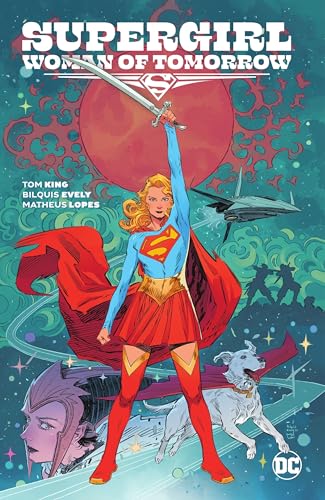
Written by Tom King · 2021
Tom King and Bilquis Evely send a disillusioned Kara Zor-El on a cosmic road trip in the acclaimed saga now adapted into a 2026 film.
Neil Gaiman's Dream escapes 70 years of imprisonment and sets off to reclaim his stolen power in the volume that launched a legend.
As an Amazon Associate I earn from qualifying purchases.