Superhero 7 min read
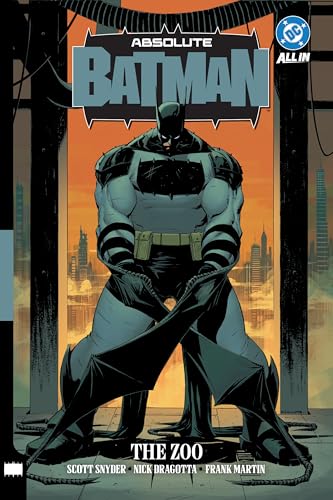
Absolute Batman, Vol. 1: The Zoo
Written by Scott Snyder · 2024
4.4
Scott Snyder and Nick Dragotta strip Batman of his fortune and mansion in the New York Times bestseller reinventing his entire origin.

Amazon Associate link
Written by Alan Moore · Art byDave Gibbons
DC Comics · Graphic Novel · 1987
Watchmen imagines an alternate 1985 where costumed vigilantes actually existed and reshaped history — a god-like being called Dr. Manhattan won the Vietnam War for the U.S. and let Richard Nixon stay in office indefinitely, while the Cold War with the Soviet Union edges toward nuclear catastrophe. When a government-sanctioned masked operative known as The Comedian is murdered, his semi-retired former colleague Rorschach starts investigating, convinced someone is hunting superheroes one by one. A simple murder mystery unravels into a meditation on power, surveillance, and the terrifying cost some are willing to pay to “save the world.”
Where most superhero stories treat costumed vigilantism as straightforwardly heroic, Watchmen asks what kind of person actually puts on a mask to fight crime — and the answers are uncomfortable. None of the “heroes” here are role models in the traditional sense: one is a nihilist, one is a narcissist convinced he’s the smartest man alive, one is a war criminal, one has withdrawn almost entirely from humanity. That discomfort is the point, not a flaw.
Alan Moore and Dave Gibbons build the story on a strict nine-panel grid and use symmetrical page layouts that mirror each other around a chapter’s midpoint. Several chapters interlock the main story with in-world documents — interviews, book excerpts, newspaper clippings — that comment on the plot from just outside it, rewarding readers who slow down and connect the pieces.
The story builds toward a choice between two irreconcilable ideas of justice — one absolute and uncompromising, one utilitarian and willing to accept horrifying costs for a “greater good” — and deliberately declines to hand the reader a clean verdict on which one was right. That ambiguity is a large part of why the book is still debated decades later.
Watchmen was written by Alan Moore, with artwork by Dave Gibbons and coloring by John Higgins. It was originally published by DC Comics as a 12-issue limited series between 1986 and 1987, then collected into a single trade paperback later that year. Moore — already known for his run on Swamp Thing and later celebrated for V for Vendetta and From Hell — has publicly distanced himself from film and TV adaptations of his work, including Watchmen; he considers the original graphic novel the only canonical version.
Watchmen rewards readers who want more from superhero stories than good triumphing over evil. Anyone interested in Cold War history, moral philosophy, or the mechanics of long-form visual storytelling will find plenty to dig into. It’s a dense, occasionally bleak read, so it may not be the best entry point if you want something light and fast.
If you’ve already seen the 2009 film or the 2019 HBO series and want the version that started it all — with an ending that plays out differently on the page — this is where to go.
What is Watchmen about? A group of retired and government-employed superheroes in an alternate 1985 America investigate the murder of one of their own, uncovering a conspiracy that questions who superheroes really serve.
Is Watchmen worth reading? Yes. It won the Hugo Award and remains the only graphic novel to appear on TIME magazine’s list of the 100 best English-language novels.
Do I need to read superhero comics to understand Watchmen? No. The book was written to critique the genre from the outside, so the story and its characters are self-contained across the 12 collected chapters.
Is the graphic novel different from the movie or the HBO series? Yes. The 2009 film is a fairly direct adaptation of the original story, while the 2019 HBO series is a separate continuation set decades later, made without Alan Moore’s involvement or endorsement.
Written by Scott Snyder · 2024
Scott Snyder and Nick Dragotta strip Batman of his fortune and mansion in the New York Times bestseller reinventing his entire origin.
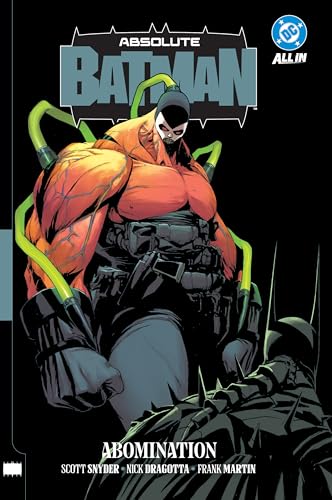
Written by Scott Snyder · 2025
Batman uncovers Mr. Freeze's dark origin and Bane's true history inside the mysterious Ark M facility in this New York Times bestseller.
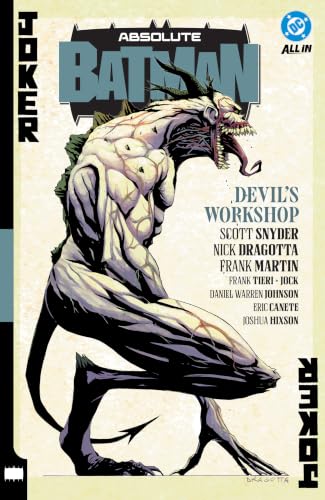
Written by Scott Snyder · 2025
Batman confronts the Joker's true origin and another Ark M threat while enlisting Wonder Woman's help in this New York Times bestseller.
Alan Moore and Dave Gibbons deconstruct the superhero myth in the only graphic novel on TIME's list of the 100 best novels ever written.
As an Amazon Associate I earn from qualifying purchases.