
Personal Development 9 min read
The 4-Hour Workweek
by Timothy Ferriss · 2007
4.5
The cult manifesto for lifestyle design: how to escape the 9-5, automate your income, live anywhere in the world, and stop deferring life until retirement.

Amazon Associate link
by Stephen R. Covey · 1989
The 7 Habits is not a book about personality tips or quick fixes. It’s a framework for becoming a more effective person from the inside out — starting with your own character, your own paradigms, and your relationship with yourself before moving to your relationships with others. Covey’s central insight: lasting effectiveness comes from character, not technique. The seven habits move you along a maturity continuum from dependence through independence to interdependence — the highest form of human achievement.
Covey spent years studying 200 years of success literature and found a striking pattern. The first 150 years focused on the Character Ethic — integrity, humility, courage, patience, and the Golden Rule. The last 50 years shifted to the Personality Ethic — image, communication techniques, and social skills that make you appear effective without necessarily being effective.
The problem: techniques without character are manipulation. You can maintain the facade for a while, but eventually what you are communicates louder than anything you say or do. The 7 Habits builds effectiveness from the character level up — not with tricks, but with deeply internalized principles.
A paradigm is the lens through which you see the world — not the world itself. Change the lens, and everything changes. Covey illustrates this with a powerful story: sitting on a subway beside a man whose children are running wild, he grows irritated. Then the man explains that his wife just died an hour ago. In an instant, Covey’s irritation disappears — replaced by compassion. Same facts. Completely different perception. The shift was instantaneous because the map changed.
The book argues that most personal and organizational problems aren’t behavioral or attitude problems — they’re paradigm problems. You can work endlessly on your attitude and behavior, but if your underlying map is wrong, you’ll arrive at the wrong destination faster and more efficiently. Fix the map first.
Between stimulus and response, there is a space. In that space is your freedom to choose. Reactive people let circumstances, conditions, and the behavior of others determine their feelings and actions. Proactive people exercise that freedom — they recognize that while they can’t control what happens to them, they can always control how they respond.
Proactive people focus their energy on their Circle of Influence — the things they can actually affect. Reactive people focus on their Circle of Concern — everything they worry about, whether they can affect it or not. The difference determines the quality of your professional and personal life. Energy spent on the Circle of Concern shrinks your Circle of Influence. Energy spent on the Circle of Influence expands it.
All things are created twice: first in the mind, then in reality. Most people live according to scripts given to them by their families, schools, employers, and culture — without ever consciously deciding what they actually want their lives to stand for.
Covey’s most powerful exercise: imagine your own funeral. What do you want the four people speaking — one from your family, one from work, one from community, one from your personal circle — to say about you? What do you want them to remember? That clarity becomes your personal mission statement. The most effective people know who they are and what they stand for before the pressures of daily life try to define it for them.
Covey’s time management framework divides all activities into four quadrants based on urgency and importance:
Most people spend their time in Quadrants I and III — reacting to whatever is urgent. The highly effective spend most of their time in Quadrant II, investing in what’s important before it becomes urgent. This is where strategic thinking, deep relationships, physical health, and personal development live. The price of neglecting Quadrant II is a life permanently in crisis.
The insight: “The key is not to prioritize what’s on your schedule, but to schedule your priorities.”
Most people are conditioned to think in terms of competition — if you win, I lose. Win/Win is a completely different paradigm: there is almost always enough for everyone, and the best agreements and relationships are those where both parties feel good about the outcome.
Covey describes the Emotional Bank Account: every interaction either makes a deposit (understanding, keeping promises, acts of kindness, honesty) or a withdrawal (criticism, broken promises, deceit, arrogance). In a high-trust relationship, you have enormous latitude. In a low-trust relationship, every communication requires extreme care. Win/Win thinking only works when the Emotional Bank Account is in good standing.
If a Win/Win solution genuinely cannot be found, the wisest choice is often Win/Win or No Deal — agreeing to disagree and walking away rather than forcing an agreement that will breed resentment.
Most people don’t listen to understand. They listen to reply. While you are talking, they are already preparing their response — filtering everything you say through their own experience and perspective, ready to give advice, evaluate, or probe based on what they think the problem is.
Covey calls this autobiographical listening — we project our own autobiography onto what others are saying. The prescription for a headache we’d never give to a stranger (“take two aspirin”) is exactly the prescription we give people with complex emotional problems (“cheer up,” “just move on”).
Empathic listening means seeking first to genuinely understand the other person’s perspective — not agree with it, but understand it so thoroughly you could explain it in their own terms. Only after that understanding is established should you seek to make yourself understood. This principle transforms relationships.
Synergy means that the whole is more than the sum of its parts. It’s the result of valuing differences — in perspective, expertise, background — rather than being threatened by them. Two people working synergistically don’t just split the work; they create something neither could have created alone.
The foundation of synergy is trust and communication that is open and creative rather than defensive. Low-trust relationships produce defensive communication, where both parties protect themselves. High-trust relationships produce synergistic communication, where both parties build on each other’s ideas and arrive at solutions that neither anticipated. This is where creativity and genuine innovation live.
This final habit is the foundation of all the others. It represents renewal across four dimensions:
Physical — exercise, nutrition, stress management, rest. Your body is the instrument through which everything else is expressed. Neglecting it undermines every other habit.
Mental — reading deeply, learning continuously, writing, planning. Covey quotes the challenge: “Not all readers are leaders, but all leaders are readers.” The discipline of feeding the mind with serious material keeps thinking sharp and perspectives fresh.
Social/Emotional — cultivating meaningful relationships, practicing empathic listening, contributing to others. Human emotional health is deeply relational.
Spiritual — clarifying your deepest values, renewing your commitment to your personal mission, practicing prayer or meditation or deep reflection. This is the core of Habit 2: returning consistently to the end you have in mind.
Sharpening the saw is the investment that makes all production possible. The lumberjack who stops to sharpen his saw loses time in the short term and gains enormously in the long term. The professional who stops to read, rest, exercise, and reflect appears less busy — and produces at a dramatically higher level.
“The key is not to prioritize what’s on your schedule, but to schedule your priorities.”
“Most people do not listen with the intent to understand; they listen with the intent to reply.”
“I am not a product of my circumstances. I am a product of my decisions.”
“Between stimulus and response there is a space. In that space is our power to choose our response. In our response lies our growth and our freedom.”
The 7 Habits is for anyone who feels that the tactics and techniques they’ve been using aren’t getting at the root of their problems — whether in their career, their relationships, or their own sense of purpose. It’s particularly valuable for people in leadership positions who want to move from managing people to genuinely inspiring them, and for anyone who has achieved external success while feeling that something more essential is missing.
It is not a light read. It requires reflection, and some chapters — particularly on Habits 4, 5, and 6 — demand honest self-assessment. But the investment is proportional to the depth of the insight. The Wall Street Journal called it “the most influential business book of the century.”
What are the 7 Habits of Highly Effective People? Be Proactive, Begin with the End in Mind, Put First Things First (Private Victories — independence), Think Win/Win, Seek First to Understand, Then to Be Understood, Synergize (Public Victories — interdependence), and Sharpen the Saw (Renewal).
What is the main message of The 7 Habits? That lasting effectiveness comes from character, not personality techniques. The book argues for an inside-out approach: change starts with yourself, your paradigms, and your values — before trying to change your circumstances or influence others.
What is the difference between Private and Public Victories? Habits 1-3 are Private Victories — they move you from dependence to independence, building self-mastery and character. Habits 4-6 are Public Victories — they move you from independence to interdependence, building effective relationships and collaboration. Private victories must precede public victories.
Is The 7 Habits still relevant? It has sold over 40 million copies in 50 languages and has been called the most influential business book of the last century. The principles it describes — proactivity, integrity, empathic listening, mutual benefit — are timeless, not time-bound.
Ready for the full experience?
Buy on Amazon →As an Amazon Associate I earn from qualifying purchases.
by Timothy Ferriss · 2007
The cult manifesto for lifestyle design: how to escape the 9-5, automate your income, live anywhere in the world, and stop deferring life until retirement.
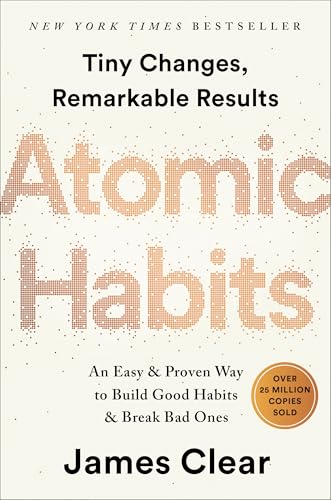
by James Clear · 2018
The definitive guide to building good habits and breaking bad ones through tiny 1% improvements that compound into extraordinary results.
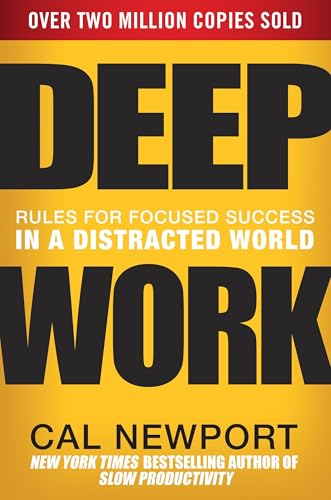
by Cal Newport · 2016
Rules for focused success in a distracted world — why deep, concentrated work is the superpower of the 21st century, and how to cultivate it.
The classic framework for personal and professional effectiveness — 7 habits that build character and move you toward true interdependence.
As an Amazon Associate I earn from qualifying purchases.