
Personal Development 9 min read
The 4-Hour Workweek
by Timothy Ferriss · 2007
4.5
The cult manifesto for lifestyle design: how to escape the 9-5, automate your income, live anywhere in the world, and stop deferring life until retirement.
Amazon Associate link
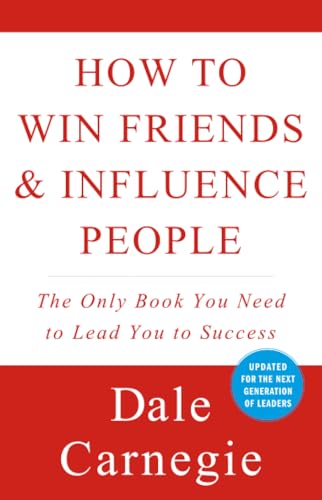
by Dale Carnegie · 1936
First published in 1936 and never out of print since, How to Win Friends and Influence People is the most widely read book on human relations ever written. Dale Carnegie spent years studying how the most successful people in history dealt with others — Lincoln, Roosevelt, Rockefeller, Carnegie — and distilled everything into one central truth: you cannot force people to do anything. The only way to get someone to do something is to make them want to do it.
The book is not about manipulation. It is about understanding people deeply enough to communicate in a way that genuinely serves them. The principles work because they are grounded in the most basic and universal human need: the desire to feel important, appreciated, and understood.
Principle 1 — Don’t criticize, condemn or complain.
Carnegie opens with a startling observation: even the most notorious criminals — Al Capone, “Two Gun” Crowley — never blamed themselves for anything. This is not unusual. It is human nature. Criticism, no matter how justified, almost never produces the result we want. Instead, it puts people on the defensive, wounds their pride, and generates resentment that can last for decades.
Abraham Lincoln learned this the hard way. As a young man, he wrote anonymous letters mocking a political rival, nearly triggering a duel. After that near-fatal confrontation, Lincoln almost never criticized anyone for anything again — not even his generals when they infuriated him during the Civil War. When General Meade let Lee’s army escape after Gettysburg, Lincoln wrote a devastating letter of reproach. Then he put it in a drawer. It was never sent. He had learned that criticism relieves the critic’s feelings but changes nothing in the other person except their desire to justify themselves.
The principle is not passivity. It is the recognition that any fool can find fault. It takes genuine character to understand, to forgive, to redirect.
Principle 2 — Give honest and sincere appreciation.
The deepest craving in human nature, said philosopher William James, is “the desire to be appreciated.” Not flattered — appreciated. Carnegie draws a sharp line between the two. Flattery is shallow and insincere; people recognize it instantly. Honest appreciation notices something genuinely good and names it specifically.
Charles Schwab — the first person in America to be paid a million-dollar salary — attributed his success not to his steel knowledge, but to his ability to inspire people through appreciation. “I am anxious to praise but loath to find fault,” Schwab said. “If I like anything, I am hearty in my approbation and lavish in my praise.”
The tragedy Carnegie identifies is universal: we take the people closest to us entirely for granted. We nourish their bodies but starve their self-esteem. A simple, honest word of thanks — for a meal, for a job well done, for just being there — can echo in someone’s memory for years. Yet we never say it.
Principle 3 — Arouse in the other person an eager want.
Carnegie’s most practical principle is also the simplest: stop talking about what you want, and start talking about what they want. When you go fishing, he notes, you bait the hook with what the fish wants — not with what you’d enjoy eating.
Henry Ford put the same idea in business terms: “If there is any one secret of success, it lies in the ability to get the other person’s point of view and see things from their angle as well as from your own.” When Carnegie himself needed to negotiate a rent reduction on a ballroom he used for lectures, he didn’t argue or demand. He sat down with the hotel manager and walked through the advantages and disadvantages for the hotel of raising the rent. He got the reduction — without mentioning what he wanted once.
1. Become genuinely interested in other people.
You can make more friends in two months by becoming truly interested in others than in two years by trying to get others interested in you. People are not interested in you or me — they are interested in themselves. The rare person who can focus their authentic attention on others creates connections that feel effortless and last.
2. Smile.
It sounds almost too simple to mention. But Carnegie makes the point seriously: a smile costs nothing and signals something profound — that you are glad to see this person, that their presence matters. It is the fastest and most consistent way to change the emotional temperature of any interaction.
3. Remember that a person’s name is the sweetest sound to them.
Andrew Carnegie was famous for knowing and using the names of everyone around him. Theodore Roosevelt knew every worker in the White House by name, from cabinet members to kitchen maids. Remembering and correctly using someone’s name is an act of respect that signals: you matter enough to me that I kept track of you. Forgetting it sends the opposite message.
4. Be a good listener. Encourage others to talk about themselves.
Most people, when they want to be interesting, talk. Carnegie found the opposite is more effective: listen. Ask questions the other person enjoys answering. Then actually listen to the answers. The person who makes you feel heard — truly heard — is worth more than the most brilliant conversationalist in the room.
5. Talk in terms of the other person’s interests.
Theodore Roosevelt, the night before receiving any visitor, read everything he could find about that person’s passions and interests. He then spoke to them about the things they cared about. The result, as Carnegie observed, was that people left Roosevelt’s presence feeling that he was a remarkable human being — when in fact, he had simply talked to them about what they already loved.
6. Make the other person feel important — and do it sincerely.
This is the master principle underlying all six. Every human being you will ever meet wants, somewhere deep inside, to feel that they matter. The person who reliably provides that feeling — through genuine attention, sincere appreciation, real interest — commands loyalty and affection that no amount of money or status can buy.
This is where Carnegie moves from likeability to influence. The section contains twelve principles; the most important are:
You can’t win an argument. Even when you win one, you lose — because the other person goes away feeling humiliated and resentful, more determined than ever to prove you wrong. The only way to get the best of an argument is to avoid it entirely.
Never say “You’re wrong.” Telling someone directly that they are mistaken is a direct attack on their judgment and pride. It makes them defensive and closes their mind. Instead, approach disagreements with phrases like “I may be wrong — let’s look at the facts together.” This keeps the other person open and makes correction feel like a collaboration, not a defeat.
If you’re wrong, admit it quickly and emphatically. Nothing disarms a critic faster than beating them to the admission. When you are at fault, say so clearly and without excuses. People who expected to argue suddenly find there’s nothing to argue about — and they respect you for it.
Get the other person saying “yes, yes” immediately. This is Carnegie’s version of Socrates’ method. Begin by asking questions the other person must agree with. Build a sequence of small “yes” responses. The mind is moving in the direction of agreement, and it becomes increasingly difficult to shift to “no.”
Let the other person feel the idea is theirs. People believe in their own ideas with a conviction they can never quite give to yours. When you want someone to adopt a course of action, find ways to plant the seed and let them water it. If they feel they arrived at the conclusion themselves, they will defend it with far more energy than if it was handed to them.
Try honestly to see things from the other person’s point of view. This is not diplomacy — it is an active mental exercise. What does this situation look like from where they are standing? What are their pressures, fears, hopes? Understanding those things makes it possible to communicate in a way that actually reaches them.
The final section deals with the hardest problem in human relations: how to change someone’s behavior when you have some authority over them — as a manager, parent, or mentor — without destroying their motivation and dignity. The principles here are subtle but powerful.
Begin with praise and honest appreciation. Before raising any criticism, find something genuine to praise. The emotional tone this creates — feeling seen and valued — makes the person far more receptive to what comes next.
Call attention to mistakes indirectly. Instead of “you did this wrong,” try “I notice this might work even better if…” The correction lands, the dignity stays intact.
Talk about your own mistakes before criticizing. It is far easier to hear criticism from someone who acknowledges their own imperfections than from someone who appears to speak from a position of superiority. Carnegie borrowed this principle from his observation of Lincoln — a man who was more willing to reflect on his own errors than to attack those of others.
Ask questions instead of giving orders. “Could we try it this way?” lands very differently than “Do it this way.” The first invites cooperation; the second triggers resistance. The outcome is often identical, but the relationship is entirely different.
Let the other person save face. This is perhaps Carnegie’s most underrated principle. When someone has made a mistake, they know it. Rubbing it in does nothing productive. Giving them a dignified way out — acknowledging circumstances, partial credit, good intentions — preserves their self-respect and keeps them in the relationship.
Give the other person a fine reputation to live up to. One of Carnegie’s most counterintuitive insights: if you want someone to improve, treat them as though they already have. Tell them you know they are capable of better. People tend to rise — or fall — to the level of the expectations placed on them.
In Chapter 2 of Part 1, Carnegie identifies the engine beneath all 30 principles: the desire to feel important. This, he argues, is the deepest and most persistent hunger in human nature. It drives ambition, creativity, generosity, and — when frustrated — jealousy, resentment, and cruelty.
John D. Rockefeller got his feeling of importance by building hospitals. John Dillinger got his by being Public Enemy Number One. Both were driven by the same need. The difference was only in how they chose to satisfy it.
Carnegie’s entire system is built on one insight: if you can make people feel genuinely important — not through flattery, but through authentic attention and sincere appreciation — they will like you, trust you, and work with you in ways that no amount of pressure or manipulation could produce.
Anyone who deals with other people — which is everyone. Whether you are in sales, leadership, parenting, a long-term relationship, or simply trying to navigate your daily life more gracefully, the principles in this book apply. They require no special intelligence or charisma. They require only practice and the willingness to shift your attention from yourself to the person in front of you.
The writing is full of stories rather than abstractions, which makes it immediately applicable. You don’t have to understand psychology to use it — you just have to begin paying attention differently.
The title of this book is often misunderstood. It sounds manipulative. It isn’t. Carnegie’s deepest argument is that the path to influence runs entirely through other people’s interests, dignity, and desire to feel valued — never through your own cleverness or will.
Stop trying to impress people. Start trying to understand them.
That single shift in attention — from yourself to the person in front of you — is, Carnegie believed, worth more than any specific technique the book contains. It is also, as it turns out, the most reliable path to the genuine friendship and influence the title promises.
“You can make more friends in two months by becoming genuinely interested in other people than you can in two years by trying to get other people interested in you.” — Dale Carnegie
Ready for the full experience?
Buy on Amazon →As an Amazon Associate I earn from qualifying purchases.
by Timothy Ferriss · 2007
The cult manifesto for lifestyle design: how to escape the 9-5, automate your income, live anywhere in the world, and stop deferring life until retirement.

by Stephen R. Covey · 1989
The classic framework for personal and professional effectiveness — 7 habits that build character and move you toward true interdependence.

by James Clear · 2018
The definitive guide to building good habits and breaking bad ones through tiny 1% improvements that compound into extraordinary results.
The all-time bestseller on human relations: 30 timeless principles for making people like you and changing behavior without resentment or manipulation.
As an Amazon Associate I earn from qualifying purchases.