
Personal Development 9 min read
The 4-Hour Workweek
by Timothy Ferriss · 2007
4.5
The cult manifesto for lifestyle design: how to escape the 9-5, automate your income, live anywhere in the world, and stop deferring life until retirement.

Amazon Associate link
by Carol S. Dweck · 2006
Carol Dweck spent decades at Stanford studying why some people thrive when faced with challenges while others collapse. Her answer is deceptively simple: it comes down to a single belief. People who think their intelligence and talent are fixed traits spend their lives trying to prove those traits. People who believe abilities can be developed spend their lives building them. The first group is trapped. The second group grows. And the gap between them — in achievement, resilience, relationships, and happiness — is enormous. The most important finding: mindset is not a personality type you’re born with. It’s a belief you hold. And beliefs can change.
The fixed mindset says: your intelligence, talent, and character are carved in stone. You have a certain amount and that’s it. Every situation becomes a test: Am I smart enough? Talented enough? If you succeed, you’re confirmed. If you fail, you’re revealed.
The growth mindset says: your basic qualities are things you can develop through effort, good strategies, and input from others. You start with certain abilities, but with work and time those abilities can grow substantially. Failure is information. Struggle is progress.
These aren’t just different attitudes. They create entirely different psychological worlds. In the fixed mindset, challenges are threatening because they might expose your limits. In the growth mindset, challenges are desirable because they’re how you expand your limits. In the fixed mindset, effort is a sign of weakness — if you were truly talented, you wouldn’t need it. In the growth mindset, effort is the mechanism that converts potential into achievement.
Dweck discovered the distinction by watching children respond to puzzles. When problems got hard, some children visibly enjoyed the challenge and doubled down. One ten-year-old boy rubbed his hands together and said, “I love a challenge!” Others became distressed, made excuses, and tried to escape. The difference wasn’t ability. It was mindset.
In the fixed mindset, failure isn’t something that happens to you. It’s something you become. A bad grade doesn’t mean you studied poorly — it means you’re not smart. A rejection doesn’t mean this particular opportunity wasn’t right — it means you’re not good enough. Failure becomes an identity label that sticks.
Dweck traces this to a fundamental confusion: treating a single moment of performance as a permanent verdict on who you are. She tells of a highly gifted chef who had earned three Michelin stars — one of the most respected restaurateurs in France — who took his own life when his restaurant’s rating dropped by two points in a secondary guide. In the fixed mindset, a lower rating wasn’t a setback. It was a redefinition of who he was: from “great chef” to “failure.” There was no coming back from that.
In the growth mindset, failure stings but doesn’t define. Jim Marshall, a Minnesota Vikings defensive player, once scooped up a fumble and ran it into the wrong end zone — scoring a safety for the opposing team, on national television. At halftime, instead of crumbling, he decided: “If you make a mistake, you’ve got to make it right.” He played some of the best football of his career in the second half. He used the experience to deepen his concentration for the rest of his life.
The difference: failure as verdict versus failure as data.
One of Dweck’s most famous studies revealed something counterintuitive: praising children for being smart backfires badly.
In the study, she gave fifth graders a series of puzzles. Afterward, she praised one group for intelligence: “You must be smart at this.” She praised another group for effort: “You must have worked really hard.” Then she gave all the children a choice: try a harder set of puzzles, or stick with similar easy ones.
The results were striking. Among children praised for intelligence, 67% chose the easy problems — why risk looking less smart? Among children praised for effort, 92% chose the harder ones — they were there to learn.
In subsequent rounds, when the problems got genuinely hard, the children praised for intelligence became demoralized, stopped enjoying the task, and their scores declined. The children praised for effort stayed engaged and showed significant improvement.
Then came the most troubling finding: when asked to report their scores to a pen pal, 40% of the intelligence-praised children lied about their scores, inflating them. Almost none of the effort-praised children did.
The lesson Dweck draws: the word “smart” is a trap. It tells children that ability is what matters and that effort is for those who aren’t smart. “You worked hard” tells them that effort is the engine of growth.
Dweck applies her framework to organizations with damaging clarity. In the late 1990s, McKinsey & Company published a landmark report called “The War for Talent,” arguing that companies should identify “stars” and lavish them with special treatment. Enron embraced this philosophy more aggressively than any other company in America.
The result? Enron went bankrupt. Dweck’s analysis: the “talent mindset” creates exactly the problems you’d predict from fixed-mindset thinking. Executives who are hired as geniuses can’t admit mistakes. Problems get hidden rather than addressed. Collaboration collapses because everyone is competing to look superior. Criticism is suppressed because it threatens the identity of the talented.
The companies that grew most sustainably, Dweck found, operated on the opposite principle. Jack Welch at GE believed in the growth of people. When a GE acquisition was hit with fraud, Welch called his top executives personally to apologize. “I blamed myself for the disaster,” he said. Compare this to the Enron CEO, who blamed everyone and everything around him. Lee Iacocca at Chrysler surrounded himself with admirers and drove Chrysler into the ground. Darwin Smith at Kimberly-Clark, who took a struggling company and made it one of the great business successes of the twentieth century, said simply: “I never stopped trying to be qualified for the job.”
Fixed-mindset leaders need to look like geniuses. Growth-mindset leaders need to build organizations that get better.
The sports world is saturated with the mythology of natural talent — the idea that champions are born, not made. Dweck dismantles this systematically through case studies.
Michael Jordan was cut from his high school varsity basketball team. He went home, locked himself in his room, and cried. Then he got to work. His devotion to practice — showing up before everyone else, staying after everyone had left, watching film obsessively — is legendary. When people called him “God in tennis shoes,” Jordan was almost baffled. “I’m a human being like everyone else,” he said. He knew exactly how hard he’d worked to develop his skills.
John McEnroe, by contrast, had a fixed mindset. He believed talent was everything. He didn’t love learning. When things got hard, he folded. He made excuses — the sawdust was the wrong texture, the camera made noise, the weather was too cold, then too warm. By his own admission, he never fulfilled his potential. His talent was so great that he became world number one anyway, but not for long and not completely.
Dweck’s point: the growth mindset doesn’t make you better than you could have been. It allows you to become what you could have been. The fixed mindset — even in people with extraordinary talent — reliably puts a ceiling on development.
Mia Hamm, the most decorated women’s soccer player of her era, described her philosophy: “All my life I’ve been playing up — challenging myself with players older, bigger, more skillful, more experienced. Each day I attempted to play up to their level, and I was improving faster than I ever dreamed possible.” That is the growth mindset in pure form.
Mindsets aren’t innate. They’re learned — through the messages we receive from parents, teachers, and coaches about what success means and what failure means.
The single most powerful message Dweck identifies: how adults praise children. “You’re so smart” communicates that intelligence is a fixed thing that you either have or don’t. It creates children who avoid challenges to protect their self-image. “You worked really hard” communicates that effort produces growth. It creates children who seek challenges to grow.
The deepest message parents can give, Dweck argues, is that the process matters. Not “How did you do?” but “What did you learn?” Not “You got an A” but “You really struggled with that — what did you figure out?” The goal is to communicate that the brain, like a muscle, grows through use. Every time you work through something difficult, your brain is literally forming new connections.
Dweck’s research team developed a program called Brainology that teaches students directly about how the brain works — that it’s not fixed, that neurons form new pathways when you practice and struggle, and that the feeling of difficulty is the feeling of your brain growing. The program produced measurable improvements in student motivation and grades, particularly for students who had internalized the message that they weren’t smart.
The closing message of the book is also its most practical: mindsets are not permanent. They are beliefs, and beliefs can be updated.
Dweck describes four steps for shifting toward a growth mindset:
First, learn to recognize the fixed-mindset voice inside you — the one that says “Are you sure you can do this?” or “What if you fail?” or “If it’s hard, you must not be good at it.” This is not truth. It’s a mindset speaking.
Second, don’t try to silence the voice. Acknowledge it. “I hear you, but I’m going to try this anyway.”
Third, take the growth-mindset action. Accept the challenge. Persist through the difficulty. Ask for help. Try a different strategy instead of giving up.
Fourth, reflect on what you learned, not just whether you succeeded.
Even this simple awareness — understanding that there are two ways of interpreting every struggle — begins to shift how you respond. Thousands of Dweck’s research subjects reported the same thing: the moment they understood the two mindsets, they started catching themselves in fixed-mindset reactions and consciously choosing differently.
The mindset doesn’t have to be your permanent operating system. It can become a tool you use — and eventually, a way of moving through the world.
“In one world, failure is about having a setback. In the other world, failure is about not growing.”
“In one world, effort is a bad thing. In the other world, effort is what makes you smart or talented.”
“Why waste time proving over and over how great you are, when you could be getting better?”
“Becoming is better than being.”
“You have a choice. Mindsets are just beliefs. They’re powerful beliefs, but they’re just something in your mind, and you can change your mind.”
Mindset is for anyone who has ever avoided a challenge to protect their self-image, given up when something got hard, or felt that struggling meant they weren’t cut out for something. Which is most of us, at some point, in some area of our lives.
It’s particularly valuable for parents and teachers — Dweck’s research on praise is among the most actionable findings in all of educational psychology. It’s equally valuable for managers and leaders who are thinking about how to build teams that are honest about problems and resilient in the face of setbacks.
Recommended by Bill Gates, Satya Nadella, and Tony Robbins, Mindset has shaped how millions of people think about human potential. It’s short, evidence-based, and unusually specific about what to do differently. If you’ve ever believed you just “weren’t a math person,” weren’t athletic, or weren’t creative — this book is a direct challenge to that belief.
What is the main idea of Mindset by Carol Dweck? The core idea is that people hold one of two beliefs about their abilities: either that they’re fixed (the fixed mindset) or that they can be developed (the growth mindset). This single belief shapes whether you seek challenges or avoid them, whether failure demoralizes you or teaches you, and whether you reach your potential or fall short of it. The good news is that the mindset itself can be changed.
What is the difference between a fixed mindset and a growth mindset? A fixed mindset holds that intelligence, talent, and character are traits you either have or don’t — and that your job is to prove you have them. A growth mindset holds that these qualities can be developed through effort, good strategies, and learning from feedback. Fixed-mindset people avoid challenges and blame failures on others. Growth-mindset people seek challenges and use failures as information.
Does praising kids for being smart cause a fixed mindset? Dweck’s research strongly suggests yes. Children praised for intelligence tend to avoid harder problems (to avoid looking less smart), lie about their scores, and become demoralized when tasks get difficult. Children praised for effort seek harder problems, persist longer, and improve more. The message “you’re smart” ties identity to outcome; “you worked hard” ties identity to process.
Is Mindset by Carol Dweck worth reading? It has over 23,000 reviews on Amazon with a 4.6 rating and is one of the most-assigned books in education, management, and psychology programs worldwide. The core ideas are research-backed, clearly explained, and applicable immediately to parenting, teaching, coaching, and personal development. For anyone interested in human potential and performance, it’s considered essential reading.
Ready for the full experience?
Buy on Amazon →As an Amazon Associate I earn from qualifying purchases.
by Timothy Ferriss · 2007
The cult manifesto for lifestyle design: how to escape the 9-5, automate your income, live anywhere in the world, and stop deferring life until retirement.

by Stephen R. Covey · 1989
The classic framework for personal and professional effectiveness — 7 habits that build character and move you toward true interdependence.
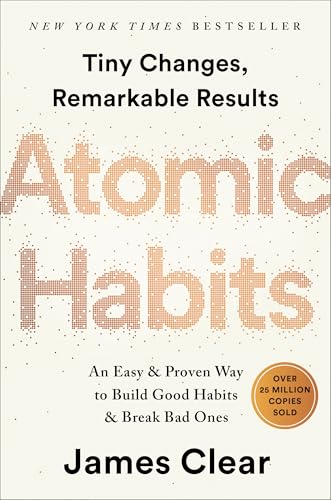
by James Clear · 2018
The definitive guide to building good habits and breaking bad ones through tiny 1% improvements that compound into extraordinary results.
A Stanford psychologist's discovery: the belief you hold about your abilities — fixed or growable — shapes your life, and you can change it.
As an Amazon Associate I earn from qualifying purchases.