
Personal Development 9 min read
The 4-Hour Workweek
by Timothy Ferriss · 2007
4.5
The cult manifesto for lifestyle design: how to escape the 9-5, automate your income, live anywhere in the world, and stop deferring life until retirement.

Amazon Associate link
by Mark Manson · 2016
Most self-help books tell you to want more: more positivity, more goals, more hustle. Mark Manson argues the opposite. We live in a culture that bombards us with reasons to care about everything, and the result is anxiety, entitlement, and a creeping sense of inadequacy. His counterproposal: life improves not by caring about more things, but by caring about fewer, better things.
The book’s central paradox — borrowed from philosopher Alan Watts and called “the backwards law” — is that the more you pursue feeling better all the time, the less satisfied you become, because pursuing something only reinforces your awareness that you lack it. Accepting negative experiences, on the other hand, is itself a positive experience. Not giving a f*ck is not indifference. It’s the deliberate act of choosing what actually matters.
Manson opens with Charles Bukowski — alcoholic, chronic gambler, post office clerk for decades, his work rejected by virtually every publisher he submitted to. At age 50, a small independent press finally took a chance on him. Bukowski wrote his first novel, Post Office, in three weeks. He went on to publish six novels and hundreds of poems, selling over two million copies. His tombstone reads: “Don’t try.”
The point isn’t that Bukowski didn’t care. It’s that he was radically honest about who he was and stopped pretending otherwise. That honesty — not ambition or positivity — was the source of his success.
Manson defines three subtleties of not giving a f*ck:
About 2,500 years ago, a prince was raised in a palace deliberately sealed off from all suffering. When he finally snuck out and saw the outside world — the sick, the old, the dying — it shattered him. He abandoned the palace, lived as a beggar for years, nearly starved himself to death, and eventually sat under a tree for 49 days until he arrived at one central realization: pain and loss are inevitable, and the attempt to resist them is itself a source of suffering. That prince later became the Buddha.
Problems never stop. They only get exchanged and upgraded. Happiness isn’t the absence of problems — it’s the constant process of solving them. People derail themselves in one of two ways: denial (pretending problems don’t exist) or victim mentality (believing nothing can be done about them). Both strategies feel good temporarily and make things worse over time.
The fictional “Disappointment Panda” — Manson’s imagined superhero who rings doorbells to deliver unwanted truths — puts it plainly: “Life is essentially an endless series of problems. The solution to one problem is merely the creation of the next one. Don’t hope for a life without problems. Instead, hope for a life full of good problems.”
In the 1960s and 70s, a self-esteem movement swept through Western education: grade inflation, participation trophies, assignments asking kids to list why they were special. The intention was noble. The result, decades later, was a generation calibrated to expect exceptionalism as a birthright.
The problem is that constant bombardment with the top 0.001% of human achievement — which is what social media and advertising select for — conditions people to see ordinary life as failure. Being average becomes “the new standard of failure.”
The counterintuitive truth: the rare people who achieve genuine excellence do so not because they believe they’re exceptional, but because they’re obsessed with improvement — driven by the honest acknowledgment that they’re not yet good enough.
Manson makes this personal. At 13, he had cut a secret compartment into the bottom of his backpack to hide marijuana. When his school’s assistant principal found it, Manson spent an afternoon in handcuffs in the back of a police car. He was expelled, homeschooled, enrolled in a private Christian school — and then, months later, his parents divorced. The trauma of that period, he says, fed years of entitlement and self-absorption before he began to unravel it.
Manson introduces the “self-awareness onion”: three layers of self-knowledge, the deepest of which is understanding why you measure success and failure the way you do — your values and metrics.
He illustrates the point with two musicians each expelled from famous bands:
Dave Mustaine was kicked out of Metallica days before their first album — handed a bus ticket from New York to Los Angeles. He founded Megadeth, which sold over 25 million albums. By any objective measure, this is an extraordinary success. Yet in a 2003 interview, Mustaine admitted through tears that he still considered himself a failure — because his internal metric was “be more successful than Metallica,” which has sold over 180 million albums.
Pete Best was fired from the Beatles in 1962, three days before recording began. He fell into depression and struggled for years. But in a 1994 interview he could say: “I’m happier than I would have been with the Beatles.” His values had shifted to family, stability, and a life he could actually inhabit. By his new metrics, he had won.
Then there’s Hiroo Onoda, a Second Lieutenant in the Japanese Imperial Army deployed to the island of Lubang in the Philippines on December 26, 1944, with orders to never surrender. When Japan surrendered in August 1945, he dismissed the leaflets announcing it as an American trick. He kept fighting for nearly 30 years — burning crops, killing civilians, surviving in the jungle. Found in 1972 by a young Japanese adventurer who located him in four days with no training, Onoda returned to Japan in 1974. He became a celebrity — and fell into the worst depression of his life. The Japan he had devoted his existence to no longer existed. His suffering had meant something in the jungle. Back in a consumerist Tokyo, it meant nothing. He moved to Brazil in 1980.
Manson identifies four values that reliably generate bad problems:
Good values share three properties: they are reality-based, socially constructive, and immediate and controllable — things like honesty, creativity, humility, and self-respect. Bad values depend on external events and other people’s behavior, placing your self-worth permanently outside your control.
In the 1860s, William James — born into a wealthy family, plagued by health problems his whole life — had dropped out of Harvard Medical School, traveled to the Amazon, contracted smallpox, and returned to New England nearly 30 years old with nothing to show for it. He fell into a deep depression.
Rather than give up, he decided to conduct an experiment: spend one year believing he was 100% responsible for everything that occurred in his life, no matter the external circumstances. If nothing changed, he’d know he was truly powerless. What happened instead is that James became the father of American psychology — teaching at Harvard, lecturing across the world, married with five children.
The distinction Manson draws: fault is past tense; responsibility is present tense. You may not be at fault for the problems in your life. But you are always responsible for how you respond to them. In 2009, an 11-year-old Pakistani girl named Malala Yousafzai began speaking out against the Taliban’s school ban in the Swat Valley. At 14, a masked Taliban soldier boarded her school bus and shot her in the head. She survived, continued to speak, and received the Nobel Peace Prize in 2014. She didn’t choose what happened to her. She chose what to do with it.
In a café in Spain, an elderly Pablo Picasso doodled on a used napkin. A woman asked to buy it. Picasso named his price: $20,000. She objected: “It took you two minutes to draw that.” He replied: “No, ma’am. It took me over sixty years to draw this.” He pocketed the napkin and left.
Improvement at anything is built on thousands of tiny failures. Psychologist Kazimierz Dabrowski studied World War II survivors in Poland in the 1950s and found something unexpected: a significant portion believed the trauma they had endured had actually made them better, more resilient, and more grateful. Pain, Dabrowski argued, is not just an obstacle — it is “the necessary pain of psychological growth.”
Manson’s rule: better values are process-oriented, not outcome-based. A goal like “become famous” or “make a million dollars” can be achieved and then leave you empty. A value like “express myself honestly” or “continuously improve my craft” is never finished — it generates new problems to solve indefinitely. That endless engagement is what lasting happiness actually looks like.
Between 2009 and 2014, Manson sold his possessions and traveled as a digital nomad, visiting 55 countries across five years. His conclusion: “absolute freedom, by itself, means nothing.”
Meaning and depth come from commitment — to a place, a craft, a person, a value — and commitment necessarily requires rejecting alternatives. Choosing a value means choosing not to pursue its opposite. Without rejection, there is no identity, only undifferentiated appetite.
This applies directly to relationships. Manson distinguishes healthy love (two people acknowledging their own problems and supporting each other in solving them) from unhealthy love (two people using each other to escape their problems). The latter creates a “victim and saver” dynamic where both parties serve the drama, not each other.
Ernest Becker spent his career being fired from academic positions for unconventional ideas. Then he was diagnosed with colon cancer. In his final years he wrote The Denial of Death, which won the Pulitzer Prize after he died in 1974. Its central argument: humans are the only animals that can conceptualize their own death, and that awareness generates a pervasive unconscious “death terror” that drives most of human behavior. To manage this terror, we build “immortality projects” — legacies, religions, families — anything that allows our conceptual self to outlive our physical one.
Our values, Becker argues, are our immortality projects. Manson’s synthesis: the only way to choose values freely — without distortion by fear or the desperate need to matter — is to make peace with the fact that you will die. As Mark Twain put it: “The fear of death follows from the fear of life. A man who lives fully is prepared to die at any time.”
“The desire for more positive experience is itself a negative experience. And, paradoxically, the acceptance of one’s negative experience is itself a positive experience.”
“You will never be happy if you continue to search for what happiness consists of. You will never live if you are looking for the meaning of life.” — Albert Camus
“Fault is past tense. Responsibility is present tense.”
“The fear of death follows from the fear of life. A man who lives fully is prepared to die at any time.” — Mark Twain
The Subtle Art of Not Giving a F*ck is for anyone who has followed the conventional self-help playbook — positive thinking, goal visualization, chasing happiness — and found themselves more anxious and less satisfied than before. It’s particularly resonant for people in their 20s and 30s who feel buried under the weight of a culture that demands they be exceptional and fulfilled at all times.
The book is also surprisingly philosophical — Camus, Alan Watts, Stoicism, Becker’s existentialism — but Manson wears his sources lightly and never lets the ideas drift from the practical. If you’re tired of being told to want more and want a rigorous, entertaining case for wanting less, more deliberately, this is the book.
What does “not giving a f*ck” actually mean in this book? It doesn’t mean indifference. Manson argues there’s no such thing as genuinely caring about nothing — we always care about something. Not giving a f*ck means becoming deliberate about what earns your attention and energy, and letting go of everything else. It’s about quality of concern, not absence of it.
What is “the backwards law” in The Subtle Art? Borrowed from philosopher Alan Watts, the backwards law states that the more you pursue feeling good all the time, the worse you feel — because the pursuit itself confirms you don’t have what you’re chasing. Accepting negative experience, paradoxically, produces a more positive result than relentlessly avoiding it.
What are the main values Mark Manson recommends in the book? Manson outlines five counterintuitive values: radical responsibility for your own experiences, tolerance for uncertainty, embracing failure as the mechanism of growth, the ability to say and hear “no,” and awareness of your own mortality. Good values in general are reality-based, socially constructive, and within your control — unlike pleasure, status, or always being right.
Who should read The Subtle Art of Not Giving a F*ck? Anyone who has tried conventional self-help and felt worse for it, or anyone overwhelmed by the cultural pressure to be exceptional and happy all the time. The book is especially useful during life transitions — a new job, a failed relationship, a quarter-life or midlife reassessment — when you need to reclarify what actually matters to you.
Ready for the full experience?
Buy on Amazon →As an Amazon Associate I earn from qualifying purchases.
by Timothy Ferriss · 2007
The cult manifesto for lifestyle design: how to escape the 9-5, automate your income, live anywhere in the world, and stop deferring life until retirement.

by Stephen R. Covey · 1989
The classic framework for personal and professional effectiveness — 7 habits that build character and move you toward true interdependence.
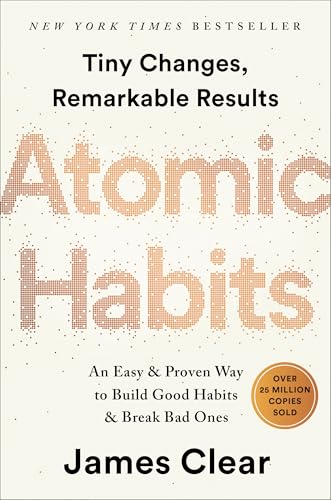
by James Clear · 2018
The definitive guide to building good habits and breaking bad ones through tiny 1% improvements that compound into extraordinary results.
A counterintuitive guide to living well — not by finding more things to care about, but by choosing fewer, better things to give a f*ck about.
As an Amazon Associate I earn from qualifying purchases.