
Personal Development 9 min read
The 4-Hour Workweek
by Timothy Ferriss · 2007
4.5
The cult manifesto for lifestyle design: how to escape the 9-5, automate your income, live anywhere in the world, and stop deferring life until retirement.

Amazon Associate link
by Paulo Coelho · 1988
First published in Portuguese in 1988, The Alchemist has sold over 65 million copies worldwide and been translated into more than 80 languages — making it one of the best-selling books in history. On the surface, it is a simple quest story: a young Andalusian shepherd follows a dream to Egypt in search of buried treasure. Beneath that, it is a parable about the most difficult journey anyone can take — the pursuit of their own destiny.
Coelho’s central argument, stated early and returned to throughout the novel, is this: “When you want something, all the universe conspires in helping you to achieve it.” But wanting something with your whole heart, he shows, is far harder — and rarer — than it sounds.
Santiago, the shepherd, begins the book with a recurring dream: a child leads him to the Egyptian Pyramids and tells him that treasure is buried there. He seeks out a fortune teller, who tells him the dream is literal — he should go to Egypt. He almost dismisses this. Then an old man appears in a plaza in Tarifa.
The old man introduces himself as Melchizedek, the King of Salem. He tells Santiago something that will anchor the entire novel: every person on earth has a Personal Legend — a unique path that was meant for them, a mission their soul chose before they were born.
“At a certain point in our lives, we lose control of what’s happening to us, and our lives become controlled by fate. That’s the world’s greatest lie,” Melchizedek says. When we are young, we know what we want. Then the world convinces us it is impossible.
Coelho describes four obstacles that prevent people from living their Personal Legends:
1. We are told from childhood that what we want is impossible. Layers of fear and guilt accumulate until the dream is buried so deep we forget it exists.
2. Love. We are afraid of hurting those we love by following our own path. We confuse love with possession, and stay put when we should move forward.
3. Fear of defeat. Those who fight for their dreams suffer more when they fail — they cannot comfort themselves by saying “I didn’t really want it anyway.” The price of caring is pain. Coelho’s answer: fall seven times, get up eight.
4. Fear of realizing the dream itself. When we are finally close to what we have always wanted, guilt arrives. We see others who failed, and feel we don’t deserve to succeed. This is the most dangerous obstacle, Coelho says, because it wears the disguise of humility.
Santiago sells his flock and crosses the strait to Africa. Within hours, he is robbed of everything. He finds himself alone in Tangier, without language or money, staring at the cobblestones of an empty plaza as the sun sets.
In this moment of total loss, something shifts. He looks at the two smooth stones Melchizedek gave him — called Urim and Thummim, tools for reading omens — and makes a decision: I am not a victim. I am an adventurer.
He finds work with a crystal merchant, a gentle, melancholy man who spends his days behind a counter dreaming of making a pilgrimage to Mecca. The merchant has dreamed of this journey for thirty years. He will never go. Not because he can’t — but because the dream of Mecca is the one thing keeping him alive. He is afraid that if he actually goes, he will have no reason left to exist.
Santiago works for the merchant for eleven months and learns more than he expects. He learns that small ideas, applied with enthusiasm, can transform a dying business. He learns Arabic. He learns to read the language without words that connects all people. And he learns the tragedy the merchant embodies: “Every blessing ignored becomes a curse.”
When Santiago finally joins a caravan crossing the Sahara, he meets an Englishman obsessed with alchemy — the ancient practice of transforming lead into gold. The Englishman spends the entire journey buried in books. Santiago, for his part, puts down the book he’s been carrying and simply watches the caravan.
“Books are like caravans,” the Englishman tells him. “They go toward the same destination.”
“And the caravan is like a book,” Santiago responds. “You ought to read more.”
Between them, Coelho draws a gentle contrast: knowledge that comes from texts, and knowledge that comes from presence. The Englishman is seeking a theory; Santiago is living one.
At the oasis of Al-Fayoum, Santiago has a vision while watching two hawks circle in the sky — he sees an army about to attack the neutral ground. He warns the tribal chieftains, the attack is repelled, and in the aftermath he meets the alchemist himself: an ancient figure who has spent two centuries understanding the language through which all creation communicates.
The alchemist calls this the Soul of the World: the invisible current that connects stones, winds, animals, stars, and human hearts. The Language of the World is spoken through omens — in the flight of birds, the layout of cards, the unexpected appearance of a stranger at precisely the right moment.
“Learn to recognize omens, and follow them,” Melchizedek had told Santiago at the start. The alchemist confirms it: the universe is not indifferent to human desire. It responds to genuine longing with guidance. The person who stays present and attentive enough to notice will always be shown the way forward.
Before reaching the Pyramids, the alchemist teaches Santiago one final practice: listening to his own heart.
“Your heart is where your treasure is,” the alchemist says. “But you have to learn to listen, because the heart changes constantly. It speaks of fear, of love, of longing. The trick is not to suppress it — it’s to understand it.”
Santiago learns that his heart panics before challenges, then becomes quiet in their aftermath. He learns that every moment of genuine searching — even in failure — feels luminous, because each moment is part of the dream. “Every second of the search is an encounter with God,” he concludes.
He also learns what happens when people refuse to listen: they drift. They grow comfortable. They become the crystal merchant, watching others pass their window on the way to Mecca.
Santiago reaches the Pyramids. He digs where his tears fall — an omen the alchemist taught him to recognize — and finds nothing. He is beaten by robbers who take what little he has left.
One of the robbers, mocking him, mentions that he himself has had a recurring dream: he sees a ruined church in Spain where shepherds and their flocks sleep, with a sycamore growing from the sacristy. He was told to dig at the roots of that tree to find buried treasure. But he is not stupid enough, he says, to travel across the world for a dream.
Santiago begins to laugh.
The treasure was in the abandoned church where he slept on the very first page of the book. It was always there. It was always his. He had to travel to Africa, work in a crystal shop, cross the Sahara, fall in love at an oasis, and reach the Pyramids — and be beaten by a robber — before someone could tell him exactly where to look.
This is Coelho’s most profound reversal: the treasure is never really at the destination. It is the journey that makes you capable of finding it. And without the journey, the treasure — even if stumbled upon — would have meant nothing and been lost immediately.
Five ideas run through the novel like veins of gold:
1. Your Personal Legend is your reason for being. Not your job, not your reputation, not your safety — your deep, specific calling. Everyone has one. Most people abandon it before thirty.
2. The universe is not neutral. It actively conspires in favor of those who pursue their destiny with genuine desire. Obstacles are tests, not rejections. Setbacks are the universe’s way of asking: Do you really want this?
3. Everything speaks the Language of the World. Omens are everywhere. The desert, the hawks, the merchant, the thief, the robber at the Pyramids — all of them carried messages. The question is whether you are present enough to hear them.
4. The present moment is the only moment. The camel driver who travels the desert teaches this: “I am alive. When I am eating, all I think about is food. If I have to fight, it will be just as good a day to die as any other.” Happiness is not a destination — it is the texture of each day lived in awareness.
5. Love does not prevent you from following your dream. Santiago leaves Fatima at the oasis — and she lets him go. True love, Coelho argues, does not chain. It sends forward. “If what you had found was only a moment of light, like the explosion of a star, you would find nothing on your return.” Love that is real survives the journey. It deepens because of it.
Anyone who has ever had a dream they haven’t followed. Anyone who has stayed in the safe place too long. Anyone who tells themselves “someday” — someday I’ll write the book, start the company, move to the city, change the path.
The Alchemist is not a how-to guide. It doesn’t give steps or frameworks. It gives something rarer: the emotional permission to believe that what you want matters, that the universe cares, and that the journey — however long and strange — will lead somewhere worth going.
It is best read slowly, and best reread at turning points in life. Many readers report that the book changes meaning completely depending on where they are when they open it.
Santiago’s treasure was buried exactly where he started. Everything in between — the merchant, the caravan, the alchemist, Fatima, the desert — was not detour. It was the transformation. Without the journey, the boy who found gold under a sycamore would simply have been a lucky shepherd. With it, he became someone who understood what the gold meant.
The treasure is real. But you have to become the person who deserves it first.
“When you want something, all the universe conspires in helping you to achieve it.” — Paulo Coelho
Ready for the full experience?
Buy on Amazon →As an Amazon Associate I earn from qualifying purchases.
by Timothy Ferriss · 2007
The cult manifesto for lifestyle design: how to escape the 9-5, automate your income, live anywhere in the world, and stop deferring life until retirement.

by Stephen R. Covey · 1989
The classic framework for personal and professional effectiveness — 7 habits that build character and move you toward true interdependence.
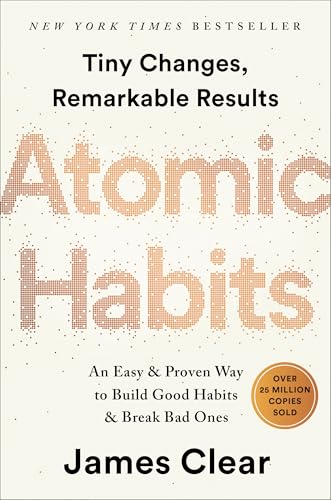
by James Clear · 2018
The definitive guide to building good habits and breaking bad ones through tiny 1% improvements that compound into extraordinary results.
A shepherd boy's journey from Spain to Egypt becomes a meditation on destiny, courage, and the universal language connecting all things.
As an Amazon Associate I earn from qualifying purchases.