
Personal Development 9 min read
The 4-Hour Workweek
by Timothy Ferriss · 2007
4.5
The cult manifesto for lifestyle design: how to escape the 9-5, automate your income, live anywhere in the world, and stop deferring life until retirement.

Amazon Associate link
by Napoleon Hill · 1937
Written in 1937 after Napoleon Hill spent 25 years studying over 500 of the world’s most successful people — including Andrew Carnegie, Henry Ford, Thomas Edison, and John D. Rockefeller — Think and Grow Rich is the original blueprint for achievement. Its central premise: wealth and success begin not with action, but with thought. Every great fortune, every significant accomplishment, starts as a clearly defined idea held in the mind with burning desire, unwavering faith, and relentless persistence.
The book opens with the story of Edwin Barnes, who arrived at Thomas Edison’s laboratory looking like a tramp with no money and no connections — but with one unwavering thought: he would become Edison’s business partner. Not an employee. A partner. He burned every bridge behind him, took any available work, and waited five years for his opportunity. When it came — in the form of a new dictating machine no one in Edison’s company believed in — Barnes seized it and became a millionaire.
Hill’s lesson: the difference between a wish and a burning desire is the difference between failure and success. Most people want things vaguely. The rich want things specifically, obsessively, and with such clarity that every action aligns with that singular purpose. Desire must be definite. It must have a deadline. It must be written down and reviewed daily.
Faith, in Hill’s framework, is not passive hope. It is the active, cultivated conviction that what you seek is already yours — that your desire will be realized. The mind, he argues, attracts into your life the people, resources, and circumstances that align with your dominant thoughts. Believe you will succeed and your mind begins constructing the path. Believe you will fail and it constructs that instead.
Hill describes faith as a “state of mind which may be induced, or created, by affirmation or repeated instructions to the subconscious mind.” This is the foundation of every affirmation practice that has emerged in the 85 years since the book was published. Repeat your goal to yourself with emotion and conviction, and over time the subconscious accepts it as fact and begins working toward it — often in ways you don’t consciously direct.
The subconscious mind does not evaluate what is real versus imagined. It accepts whatever is fed to it repeatedly and with emotion. This is both the mechanism of fear and the mechanism of confidence: whatever you tell yourself most persistently becomes your operating reality.
Hill’s practical method: write down your specific financial goal and the date by which you will achieve it. State what you intend to give in return. Read this statement aloud twice daily — once before sleep, once upon waking — with full emotional conviction. You are not trying to force belief; you are training the subconscious through repetition until belief emerges naturally.
General education, Hill argues, is almost useless for building wealth. What matters is specialized knowledge — deep expertise in a specific domain — combined with the ability to organize and apply that knowledge toward a defined purpose.
Henry Ford never finished high school. Edison had three months of formal schooling. Carnegie knew very little about steel. What each had was specific, applied knowledge in their domain — and more importantly, the wisdom to surround themselves with people who knew what they didn’t. Hill calls this the principle of the Master Mind Alliance: a group of specialists whose combined knowledge exceeds what any single person could possess. Ford’s real genius was his ability to direct the specialized knowledge of others toward his goals.
Hill distinguishes between two forms of imagination. Synthetic imagination rearranges existing concepts and ideas into new combinations — most invention and business innovation is synthetic. Creative imagination is the “sixth sense” through which entirely new ideas appear, as if transmitted from some universal intelligence.
Both are trainable. The more you use imagination, the stronger it becomes. Every great product, company, and fortune began as an imagined construct before it existed in reality. Ideas, Hill repeats throughout the book, are the only starting point of all achievement. The person who can generate ideas and act on them with persistent effort will always outperform the person who only applies labor.
Desire without a plan remains a dream. Hill’s method for converting burning desire into results: create a specific, written plan of action, begin immediately, and revise the plan as often as necessary — but never abandon the goal. Temporary defeat is not failure. It is feedback.
The story of R. U. Darby captures this principle unforgettably. Darby’s uncle struck gold in Colorado, borrowed money for equipment, and began mining. Then the vein disappeared. After drilling desperately for weeks, he sold his equipment to a junkman and gave up. The junkman hired a mining engineer who calculated that the gold vein was three feet from where Darby had stopped drilling. Three feet. The junkman extracted millions.
Darby later became one of the top life insurance salespeople in America. His secret: every time a prospect said no, he remembered he had stopped three feet from gold — and he kept going.
Hill studied 500 successful people and found that without exception they made decisions quickly and changed them slowly. Those who accumulated nothing made decisions slowly and changed them quickly — always looking for a way out.
The moment you make a firm decision, resources and opportunities that were invisible begin to appear. This is not mysticism. It is focus: when the mind is committed to a course of action, it starts noticing relevant information it had been filtering out. Indecision dissipates energy. Decision concentrates it. Tell very few people about your goals — opinions, even well-meaning ones, will introduce doubt. Let your results speak.
Most people quit. They quit when the first plan fails, when temporary defeat comes, when they feel embarrassed or tired or afraid. The difference between people who achieve lasting success and those who don’t is almost never talent, intelligence, or luck. It is persistence — the refusal to let temporary defeat become permanent failure.
Hill lists four simple steps for developing persistence: a definite purpose backed by burning desire; a specific plan expressed in continuous action; a mind closed firmly against all negative and discouraging influences; and a Master Mind alliance with at least one person who encourages you. These four steps cost nothing except commitment.
No one ever achieved great success entirely alone. Carnegie had his circle of advisors. Ford had his team of engineers and executives. Every major fortune described in the book was built with the active cooperation of others. Hill defines the Master Mind as “coordination of knowledge and effort, in a spirit of harmony, between two or more people for the attainment of a definite purpose.”
The value of a Master Mind goes beyond the sum of its members’ knowledge. When two or more minds work together in complete harmony toward a common goal, a third, invisible force is created — a collective intelligence that exceeds what either person could access alone.
Hill’s final chapter catalogs the enemies of wealth and achievement. The six basic fears are: the fear of poverty, the fear of criticism, the fear of ill health, the fear of loss of love, the fear of old age, and the fear of death. Most people carry multiple fears simultaneously, and each one acts as a brake on desire, faith, and action.
The antidote is the same for all six: awareness and decision. Fear is a state of mind, and the mind is entirely under your control. When you recognize that the fear of criticism — perhaps the most common — has been preventing you from starting, speaking, or committing, you can choose to act anyway. The action itself dissolves the fear.
“Whatever the mind can conceive and believe, it can achieve.”
“Thoughts are things — and powerful things at that, when they are mixed with definiteness of purpose, persistence, and a burning desire.”
“Success comes to those who become success conscious. Failure comes to those who indifferently allow themselves to become failure conscious.”
“The starting point of all achievement is desire. Keep this constantly in mind. Weak desire brings weak results, just as a small amount of fire makes a small amount of heat.”
Think and Grow Rich has sold over 100 million copies and is considered the foundational text of the personal development genre. Every major self-help book written since 1937 — from The Power of Positive Thinking to Awaken the Giant Within — draws directly from Hill’s principles.
It’s best suited for people who are beginning to take their ambitions seriously and want a philosophical framework for thinking about success. The language is of its era (it was written during the Great Depression) but the principles are timeless. If you’re skeptical of self-help books, this is the one to read first — because most of what you’ve already encountered is a variation of what Hill wrote nearly a century ago.
What is Think and Grow Rich about? It presents 13 principles — including desire, faith, persistence, decision, and the Master Mind — that Napoleon Hill distilled from 25 years of studying over 500 of history’s most successful people. It argues that wealth begins in the mind and that disciplined thought, combined with persistent action, is the real formula for achievement.
What is the secret in Think and Grow Rich? Hill deliberately never names it directly, saying it works better when readers discover it themselves. Most analysts agree it is the concept of a definite major purpose — a specific, burning desire held with absolute faith and acted upon with persistence. The secret is that controlled thought, focused on a specific goal, attracts everything needed to achieve it.
Is Think and Grow Rich still relevant today? Yes. The psychological principles — the power of focused desire, the role of the subconscious, the danger of fear and indecision, the value of deliberate collaboration — are as applicable in the 21st century as they were in 1937. The specifics of some examples are dated; the framework is not.
Who should read Think and Grow Rich? Anyone who has goals they haven’t acted on, anyone who has let fear or procrastination hold them back, or anyone who wants to understand the philosophical roots of the modern personal development industry.
Ready for the full experience?
Buy on Amazon →As an Amazon Associate I earn from qualifying purchases.
by Timothy Ferriss · 2007
The cult manifesto for lifestyle design: how to escape the 9-5, automate your income, live anywhere in the world, and stop deferring life until retirement.

by Stephen R. Covey · 1989
The classic framework for personal and professional effectiveness — 7 habits that build character and move you toward true interdependence.
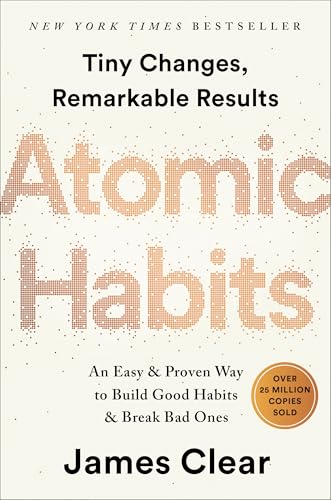
by James Clear · 2018
The definitive guide to building good habits and breaking bad ones through tiny 1% improvements that compound into extraordinary results.
The classic that spent 25 years studying 500 of history's most successful people, distilling their secrets into 13 principles for success.
As an Amazon Associate I earn from qualifying purchases.