
Personal Development 9 min read
The 4-Hour Workweek
by Timothy Ferriss · 2007
4.5
The cult manifesto for lifestyle design: how to escape the 9-5, automate your income, live anywhere in the world, and stop deferring life until retirement.

Amazon Associate link
by Viktor E. Frankl · 1946
First published in German in 1946 as Ein Psycholog erlebt das Konzentrationslager, Man’s Search for Meaning tells how a Viennese psychiatrist survived three years across four Nazi camps — Theresienstadt, Auschwitz-Birkenau, Kaufering, and Türkheim — while his pregnant wife, his parents, and his brother did not. Viktor Frankl wrote the book in nine days, originally intending to publish it anonymously, using the extreme conditions of camp life to test an idea he had already begun forming before his arrest: that the primary drive in human beings isn’t Freud’s pleasure or Adler’s power, but meaning. Part One is the autobiographical account of the camps; Part Two, “Logotherapy in a Nutshell,” added for the 1962 edition, lays out the therapeutic method Frankl built from that conviction. This edition adds a foreword by Rabbi Harold Kushner and an afterword by William J. Winslade to the 1984 postscript on tragic optimism.
Frankl was born in Vienna in 1905 and decided at age three that he wanted to become a physician. As a teenager he corresponded with Sigmund Freud, who submitted one of Frankl’s own papers to a psychoanalytic journal for publication. By 1939 he headed the neurology department at Rothschild Hospital, Vienna’s only Jewish hospital. In 1942 he let a U.S. immigration visa lapse rather than leave his aging parents behind in Austria; that September, he and his family were arrested and deported. Over the next three years he passed through four camps before being liberated in 1945, nearly dead from typhus. On his first day back in Vienna, he learned that his pregnant wife, Tilly, had died at Bergen-Belsen; his parents and brother had also perished. Rather than emigrate, as many surviving Jewish psychiatrists did, Frankl stayed in Vienna and wrote this book in nine days in 1946, intending it to appear without his name attached — he reconsidered only at the last moment, deciding an anonymous book “would lose half its value.” By the time he wrote a new preface in 1992, it had gone through nearly one hundred English printings and been translated into twenty-one languages; by 2006, sales topped twelve million copies in twenty-four languages.
Frankl’s central claim is that even under total deprivation, one freedom cannot be confiscated: the choice of attitude. He traces this back to his first hours in Auschwitz, when new arrivals filed past an SS officer who pointed, almost lazily, left or right — work, or the gas chamber — without any of them grasping what the gesture meant. About 90 percent of his transport, sent left, were dead within hours. Frankl was sent right, after the officer studied him, appeared to hesitate, then turned his shoulders that way by hand — one of the many arbitrary turns that, as Frankl tells it, decided who lived and who didn’t, with little relation to anything the prisoners themselves did. From that experience, and from watching which prisoners kept some hold on themselves under years of abuse, Frankl built his best-known claim: that everything can be taken from a person but one thing, “the last of the human freedoms — to choose one’s attitude in any given set of circumstances, to choose one’s own way.”
During a forced march to a work site, freezing and exhausted, Frankl found himself thinking of his wife with such intensity that her imagined face, he writes, was “more luminous than the sun which was beginning to rise.” He had no way of knowing whether she was alive — camp prisoners received no mail — and he later realized it didn’t matter to the experience itself: love, he concluded, went far beyond her physical presence — it lived just as fully in her inner self, whether or not she was still alive to receive it. It was on that anonymous, pre-dawn road, still trudging toward the work site with the sky just beginning to lighten, that Frankl says he first understood what poets and religious thinkers had meant for centuries by calling love humanity’s highest aspiration: “The salvation of man is through love and in love.”
Frankl describes a young woman who told him cheerfully that she knew she would die within days. Pointing through the hut’s window at a chestnut tree with two blossoms visible on one branch, she said it was her only friend in her loneliness, and that it spoke to her: “I am here — I am here — I am life, eternal life.” Frankl uses moments like this to argue that suffering, when it truly cannot be avoided, becomes a task like any other — one a person can rise to or refuse. He illustrates the danger of trying to outrun a fate with an old Persian parable: a servant flees to Teheran on his master’s fastest horse after seeing Death in the garden, only for the master to later ask Death why he had threatened the servant — Death replies that he hadn’t threatened him, only shown surprise at finding him still there, since he had an appointment to meet him that very night, in Teheran. Facing suffering rather than fleeing it, Frankl argues, requires a full reversal of how people usually frame the question of meaning: not asking what you can still expect from life, but recognizing that life is questioning you, “daily and hourly,” and that the only answer worth giving is “right action and right conduct” rather than talk.
In Part Two, Frankl formalizes the theory his camp experience had tested: that the primary human drive is neither Freud’s pleasure principle nor Adler’s will to power, but what he calls the will to meaning. He backs the claim with survey data: in a French opinion poll, 89 percent of respondents said they needed “something” to live for, and 61 percent named something, or someone, they would be willing to die for; when Frankl repeated the poll among his own patients and staff in Vienna, the results landed within 2 percent of the French figures. A separate study of 7,948 students across forty-eight colleges, run by Johns Hopkins University, found that 78 percent rated “finding a purpose and meaning to my life” as their first goal, against just 16 percent who chose “making a lot of money.” When the will to meaning is blocked, Frankl calls the result existential frustration; when that frustration produces an actual neurosis, he calls it noögenic, rooted not in ordinary psychological conflict but in the specifically human capacity to ask what life is for. He reports finding a “more-or-less marked degree” of this existential vacuum in 25 percent of his European students, and 60 percent of his American ones.
Logotherapy holds that meaning can be reached three ways: by creating a work or doing a deed, by experiencing something or loving someone, and — when neither of the first two is available — through the attitude a person takes toward suffering that cannot be changed. Frankl illustrates the third path with a case from his own practice: an elderly doctor came to him unable to move past his wife’s death two years earlier. Rather than offer sympathy, Frankl asked what would have happened if he had died first, leaving his wife to grieve him instead. The doctor admitted she would have suffered terribly. “You see, Doctor,” Frankl told him, “such a suffering has been spared her, and it was you who have spared her this suffering — to be sure, at the price that now you have to survive and mourn her.” The man shook Frankl’s hand and left without another word; his grief, once reframed as a form of protection he had given his wife, had found a meaning it didn’t carry before.
Frankl’s most concrete clinical tool is what he calls paradoxical intention: instead of fighting a fear, the patient is coached to deliberately, even humorously, wish for the very outcome they dread, which breaks the feedback loop of anticipatory anxiety that was reinforcing the symptom in the first place. His clearest example is a young physician terrified of sweating in public, a fear that alone was enough to trigger the sweating. Frankl told him that the next time he felt an attack coming on, he should resolve to show people exactly how much he could sweat. A week later, the physician reported that whenever he met someone who used to trigger his anxiety, he now told himself, “I only sweated out a quart before, but now I’m going to pour at least ten quarts!” The technique worked: a phobia he had carried for four years was gone within a week. Frankl reports the same method clearing a bookkeeper’s severe writer’s cramp in forty-eight hours, once the man was told to try writing with the worst possible scrawl instead of straining for neatness.
Writing nearly forty years after the war, in the 1984 postscript, Frankl coined the phrase “tragic optimism” for his answer to what logotherapy calls the tragic triad: pain, guilt, and death. None of the three can be argued away, he writes, but each can be turned into something — suffering into achievement, guilt into the chance to change, and mortality into a reason to act responsibly now rather than later. As evidence this isn’t just theory, he quotes a letter from Jerry Long, paralyzed from the neck down at seventeen after a diving accident, who was attending college courses by telephone and typing with a mouth stick when he wrote to Frankl: “I broke my neck, it didn’t break me… I know that without the suffering, the growth that I have achieved would have been impossible.” From the same chapter comes Frankl’s proposed rule for facing mortality head-on: to “live as if you were living for the second time and had acted as wrongly the first time as you are about to act now.”
“He who has a why to live for can bear with almost any how.”
“The salvation of man is through love and in love.”
“Everything can be taken from a man but one thing: the last of the human freedoms — to choose one’s attitude in any given set of circumstances, to choose one’s own way.”
“I broke my neck, it didn’t break me.”
Man’s Search for Meaning is written for anyone facing a situation they cannot change — grief, chronic illness, addiction, a diagnosis, a loss of status or direction — and looking for a way to make that situation bearable rather than merely survivable. Because Part One is a firsthand account of some of the worst circumstances the twentieth century produced, it carries an authority that few books making claims about resilience can match: Frankl isn’t a motivational speaker but the founder of an entire school of psychotherapy, one he tested against the deaths of nearly everyone he loved. Readers looking for practical technique rather than narrative will get the most immediate use out of Part Two’s paradoxical intention method, which Frankl illustrates through several concrete clinical cases rather than abstract theory.
Readers approaching the book expecting a conventional Holocaust memoir should know its purpose is philosophical rather than historical. Frankl explicitly sets aside the camps’ worst horrors, which he says have already been documented enough elsewhere, in favor of the ordinary, hour-by-hour psychology of survival — and the book moves fairly quickly from that narrative into logotherapy’s theoretical framework in Part Two, which reads more like a clinical lecture than a continuation of the story.
What is Man’s Search for Meaning about? It’s Viktor Frankl’s account of surviving three years across four Nazi concentration camps, paired with the psychological theory he built from that experience — logotherapy, which holds that the primary human drive is the search for meaning, not pleasure or power. Part One tells the survival story; Part Two explains the therapy method Frankl developed from it.
What is the main lesson of Man’s Search for Meaning? That even when every external freedom is taken away, one freedom remains: the choice of attitude toward whatever happens to you. Frankl argues that prisoners who could still hold onto some reason to live — a person waiting for them, unfinished work, or simply the choice to face suffering with dignity — had a better chance of enduring the camps than those who lost their sense of a future.
What does “logotherapy” mean? It comes from logos, the Greek word for “meaning.” Logotherapy is Frankl’s own school of psychotherapy, built on the idea that the will to meaning, rather than Freud’s will to pleasure or Adler’s will to power, is what primarily drives human behavior. Its core clinical technique, paradoxical intention, treats anxiety-based symptoms by having patients deliberately wish for the very outcome they fear, breaking the cycle of anticipation that was reinforcing it.
Is Man’s Search for Meaning worth reading? Yes — a 1991 Library of Congress/Book-of-the-Month Club survey named it among the ten most influential books in America, and it has sold more than 12 million copies in 24 languages. It works as both a historical account and a practical framework, though readers should expect Part One and Part Two to read very differently — one narrative, one clinical.
Ready for the full experience?
Buy on Amazon →As an Amazon Associate I earn from qualifying purchases.
by Timothy Ferriss · 2007
The cult manifesto for lifestyle design: how to escape the 9-5, automate your income, live anywhere in the world, and stop deferring life until retirement.

by Stephen R. Covey · 1989
The classic framework for personal and professional effectiveness — 7 habits that build character and move you toward true interdependence.
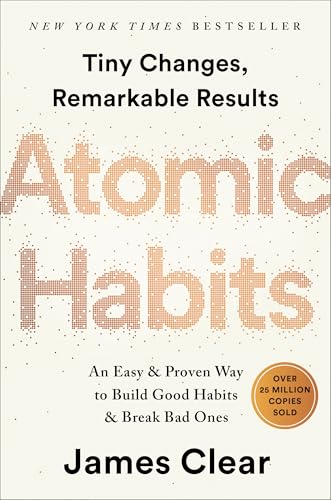
by James Clear · 2018
The definitive guide to building good habits and breaking bad ones through tiny 1% improvements that compound into extraordinary results.
A Viennese psychiatrist survives three years across four Nazi camps and emerges with a theory: the primary human drive is meaning, not pleasure or power.
As an Amazon Associate I earn from qualifying purchases.