
Finance 8 min read
The Intelligent Investor
by Benjamin Graham · 1949
4.7
The foundational text of value investing: why Wall Street's formulas fail, and why margin of safety — not forecasting — protects your money.
Amazon Associate link
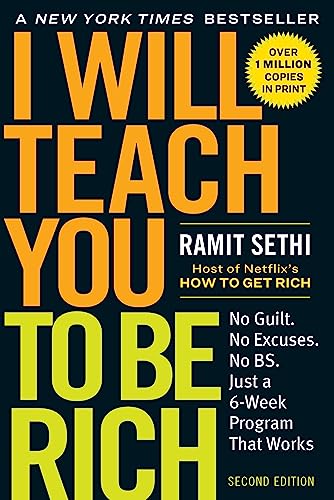
by Ramit Sethi · 2019
Most personal finance books tell you to cut back on everything. Ramit Sethi argues the opposite: stop obsessing over small savings, automate the big decisions, and spend freely on whatever you actually love. The goal isn’t frugality — it’s building a system so automatic that the money flows to the right places without willpower or attention, leaving you genuinely guilt-free to spend the rest however you want.
The book’s central mantra: spend extravagantly on the things you love and cut costs mercilessly on the things you don’t. It’s a six-week program covering credit, banking, investing, spending, and automation — all the pieces most people delay for years.
Sethi opens with a comparison called Smart Sally and Dumb Dan. Both invest $200 per month, but at different ages. Sally starts at 35, invests for 10 years, then stops and never touches the money again. Dan starts at 45 and invests for 20 years. At 65, Sally has $181,469 and Dan has $118,589 — Sally ends up with about $60,000 more, despite having stopped investing earlier. Dan invested for twice as long and still lost.
The lesson: time in the market beats everything else. Sethi calls his response to this the 85% Solution — getting started imperfectly is better than waiting until you understand everything: “I’d rather act and get it 85 percent right than do nothing.” Most people never start because they want to understand every detail first. By then, the compounding years are gone.
Sethi’s own journey illustrates it. In high school, he applied for about 60 scholarships and won hundreds of thousands of dollars to pay for Stanford. His first $2,000 scholarship check went directly into the stock market — and he immediately lost half. That failure pushed him to actually learn how money works. He began writing about it in 2004, which became the blog that became this book.
The first week of Sethi’s program is about credit — not to scare you away from credit cards, but to show how to maximize their benefits while paying nothing in interest.
Your FICO credit score (range: 300–850) is built from five factors: 35% payment history, 30% amounts owed (credit utilization), 15% length of credit history, 10% new credit, and 10% mix of credit types. On a $200,000 30-year mortgage, a score of 760–850 yields an interest rate of 4.279%, for a total cost of $355,420. A score of 620–639 yields 5.868% — a total of $425,585. That’s roughly $70,000 more, paid simply for not managing credit well.
The hidden cost of credit card debt is equally startling. A $10,000 sofa financed at minimum payments (2% of balance, 14% APR) takes 32 years and 2 months to pay off — plus $13,332 in interest, more than the original price. On a $5,000 debt, the difference between paying the minimum (25+ years, $6,322 in interest) versus $200/month fixed (2.5 years, $946 in interest) is enormous.
Sethi’s six commandments of credit cards: pay in full every month; get annual fees waived; negotiate your APR down; keep main cards for a long time; request credit limit increases if you’re debt-free; and use every perk your card offers (automatic warranty extensions, free rental car insurance, trip-cancellation coverage). The credit card companies’ own term for customers who pay in full every month is “deadbeats” — because they generate no revenue.
For getting out of debt: two methods exist, the snowball (smallest balance first) and the standard (highest APR first). Sethi’s advice: don’t spend more than five minutes deciding. Pick one and start immediately.
In 2017, US banks collected more than $34 billion in overdraft fees alone. Wells Fargo fraudulently opened accounts for 3.5 million customers without permission and forced 570,000 borrowers into unneeded auto insurance — roughly 20,000 had their cars repossessed as a result.
Sethi’s recommended setup: a Schwab online checking account (which reimburses all ATM fees worldwide at month-end) and a Capital One 360 savings account. He recommends keeping them at two separate banks — the psychological friction of a 3-day transfer keeps you from raiding your savings for weekend spending.
The interest rate on savings accounts is largely irrelevant. The difference between 0.5% and 3% on a $5,000 emergency fund is $2 versus $12.50 per month. As Sethi puts it: “The amount I earn from one year of investing is worth more than 500 years of interest in a savings account.”
The median 401(k) balance for Americans aged 56–61 is $25,000. Sethi notes this could have been accomplished by investing $6 per month since 1980. Yet only 1 in 3 people participates in a 401(k) at all. Among those earning under $50,000 per year, 96% don’t contribute the maximum. And 80% of all 401(k) participants — 4 out of 5 — don’t contribute enough to capture the full employer match. That match is free money. Most people leave it on the table every year.
The stock market’s average return over the 20th century: 11% annually minus 3% inflation = 8% real net return. That’s the number to plan around.
Sethi’s investment priority ladder:
The order matters because each rung has a different guaranteed return profile. Don’t skip them.
82% of Americans claim to have a budget. Sethi’s assessment: “complete nonsense.” Budgets fail because tracking every purchase in real time is tedious and nobody sustains it.
His alternative: the Conscious Spending Plan. Automate your savings and investments first. Then spend everything that remains, guilt-free. The plan divides take-home pay into four buckets:
The distinction between cheap and conscious is key. Researchers behind The Millionaire Next Door found that 50% of more than 1,000 millionaires surveyed had never paid more than $400 for a suit, $140 for shoes, or $235 for a watch — not because they couldn’t afford it, but because they chose to spend elsewhere. One of Sethi’s friends spends over $21,000 per year going out — roughly $100 per night, four nights a week. He saves more than most of Sethi’s other friends because he has automated his investments and eliminated categories he doesn’t care about. His apartment is barely furnished and he skips vacations. That is conscious spending.
On subscriptions: the À La Carte Method — cancel all discretionary subscriptions, then buy only what you use individually. Gym members overestimate how often they’ll go by more than 70%. Those paying $70/month average 4.3 visits — $17 per visit — when a day pass costs $10.
On money and happiness: a 2010 study by Deaton and Kahneman found that emotional well-being peaks around $75,000 per year. But life satisfaction shows no plateau — not at $500,000, not at $1 million. Spending money to buy time (outsourcing tasks you dislike) consistently correlates with greater life satisfaction.
“Automating your money will be the single most profitable system you ever build.” Once configured — which takes a few hours — it runs indefinitely with almost no maintenance. One reader set it up at 23 with $17,000 in savings. Ten years later: $170,000.
The system: your paycheck hits your checking account. Automated transfers immediately route money to your 401(k) (via payroll), your Roth IRA, your savings sub-accounts (emergency fund, vacation, down payment), and your credit card auto-pay. The money remaining in checking is yours to spend, no tracking required.
The system takes advantage of human laziness rather than fighting it. Once transfers are configured, you won’t bother to cancel them — which means you’re saving and investing consistently with zero willpower. Maintenance: roughly 90 minutes per month.
Fund managers fail to beat the market 75% of the time. A 16-year study by S&P Dow Jones Indices found that managers who outperformed their benchmark in one year had a less-than-coin-flip chance of doing so the next.
The unpredictability of stock selection: $1,000 invested in Google in January 2008 grew to about $3,000 by 2018 — a triple. The same $1,000 invested in Domino’s Pizza grew to nearly $18,000. Nobody predicted Domino’s.
Timing the market is equally futile. A Putnam Investments study of the S&P 500 over 15 years found an annualized return of 7.7%. If you had missed the 10 best days of that period, your return would have dropped to 2.96%. If you had missed the 30 best days, your return would have been -2.47% — you would have lost money. In dollar terms: $10,000 kept in the market for 15 years = $30,711. Missed 10 best days = $15,481. Missed 30 best days = $6,873.
The solution, confirmed by a 1986 study in the Financial Analysts Journal by Brinson, Hood, and Beebower: more than 90% of your portfolio’s volatility comes from asset allocation — how you divide money between stocks and bonds — not from which individual stocks you pick. Your investment plan matters more than your individual investments.
Sethi recommends target date funds for anyone who wants simplicity (one fund that auto-rebalances as you age), or low-cost Vanguard index funds for those who want to build their own allocation. The exceptions who consistently beat the market — Buffett at 20.9% annualized over 53 years, Peter Lynch at 29% over 13 years, David Swensen at 13.5% over 33 years — operate with access to proprietary investments that individual investors will never have.
The Federal Reserve reports the average college graduate carries about $35,000 in student loans. On whether to invest or pay them down: if your loan rate is around 2%, invest the rest. If it’s high, pay it down first. For most situations, Sethi recommends a hybrid 50/50 approach — you benefit from compound interest while reducing debt.
Once the system is running, the real work is designing the life you want. Sethi wrote parts of this book from a safari lodge in Kenya during a six-week honeymoon that included flying both sets of parents to Italy. His Rich Life: making career decisions based on what interests him rather than desperation; supporting his parents’ retirement; spending freely on what he values without anxiety about the basics.
What a Rich Life means is different for everyone. When Sethi first wrote it down, one goal was simply to order appetizers at a restaurant without hesitation — something he never did growing up. The goals grew as his income did. The point is intentionality about what the money is for.
“The single most important thing you can do to be rich is to start early.”
“Spend extravagantly on the things you love and cut costs mercilessly on the things you don’t.”
“Your investment plan is more important than your actual investments.”
“Living a Rich Life happens outside the spreadsheet.”
“Would you rather be sexy or rich?”
I Will Teach You to Be Rich is for anyone in their 20s and 30s who earns a reasonable income but has no system for where it goes — and feels vague guilt about spending while having no real savings. It’s especially valuable for people who have been paralyzed by the complexity of personal finance and haven’t started investing at all.
It’s not a book about cutting lattes. It’s about building an automatic infrastructure so that money flows to the right places without requiring willpower or attention, leaving you free to spend everything else without guilt or second-guessing.
What is the “85% Solution” in I Will Teach You to Be Rich? Sethi’s core philosophy: getting started imperfectly is better than waiting until you’ve researched everything. A financial system that’s 85% optimized and actually running beats a theoretically perfect system you never set up. The biggest mistake is doing nothing while waiting to do everything right.
What is the Conscious Spending Plan and how does it differ from a budget? Instead of tracking every purchase, you automate savings and investments first, then spend what remains guilt-free. The plan allocates roughly 60% to fixed costs, 10% to investments, 5–10% to savings goals, and 20–25% to guilt-free spending. The goal is automation, not willpower.
What order should I invest in, according to Ramit Sethi? The priority ladder: (1) contribute to 401(k) up to the full employer match — free money; (2) pay off high-interest credit card debt; (3) open and max a Roth IRA; (4) max the 401(k); (5) invest in taxable accounts. Each rung has a different guaranteed return profile, so order matters.
Is I Will Teach You to Be Rich worth reading? For anyone in their 20s or 30s without an automated financial system, yes. The approach is unusually concrete — specific accounts, specific scripts for negotiating fees, specific steps to automate everything. The six-week framework covers every major financial piece most people delay for years, and it can be fully implemented in a single weekend.
Ready for the full experience?
Buy on Amazon →As an Amazon Associate I earn from qualifying purchases.
by Benjamin Graham · 1949
The foundational text of value investing: why Wall Street's formulas fail, and why margin of safety — not forecasting — protects your money.
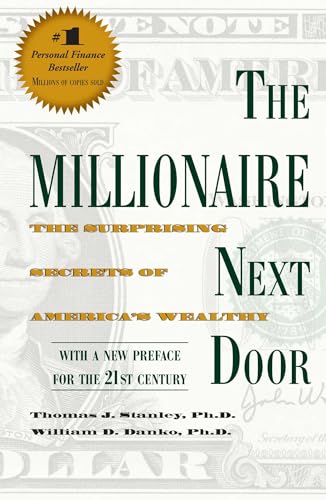
by Thomas J. Stanley & William D. Danko · 1996
The landmark study revealing that most American millionaires are ordinary people who live in ordinary houses and build wealth below their means.
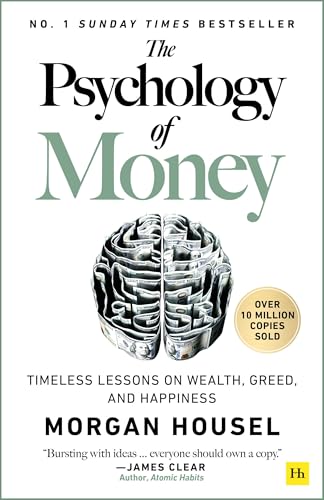
by Morgan Housel · 2020
Timeless lessons on wealth, greed, and happiness — exploring why smart people make irrational financial decisions and how behavior matters more than knowledge.
A no-guilt personal finance system for your 20s and 30s: automate savings and investing, spend on what you love, and cut everything else.
As an Amazon Associate I earn from qualifying purchases.