Finance 8 min read
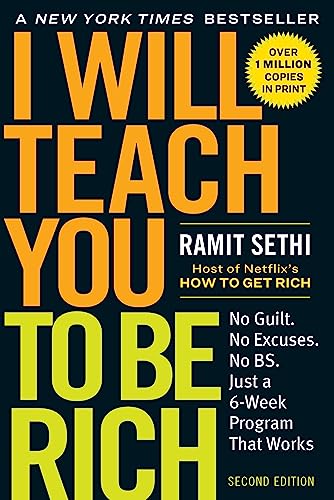
I Will Teach You to Be Rich
by Ramit Sethi · 2019
4.6
A no-guilt personal finance system for your 20s and 30s: automate savings and investing, spend on what you love, and cut everything else.
Amazon Associate link
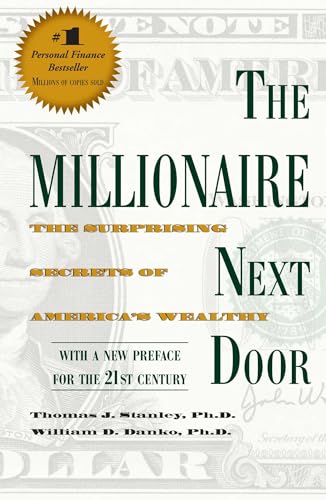
by Thomas J. Stanley & William D. Danko · 1996
Thomas Stanley and William Danko spent twenty years surveying millionaires across America and discovered something that upended everything most people believe about wealth. The rich do not look rich. They don’t drive new luxury cars, wear custom suits, or live in the most expensive neighborhoods. The typical American millionaire is a self-employed business owner who has been married to the same person for decades, lives in a modest house, drives a used American car, clips coupons, shops at JC Penney, and has quietly accumulated $1.6 million in net worth while his high-income neighbors — lawyers, doctors, corporate executives — are living paycheck to paycheck. Wealth is not what you spend. Wealth is what you accumulate. And the gap between people who know this and people who don’t determines almost everything about their financial futures.
The foundational distinction in this book is one most people never make: income and wealth are not the same thing. A household earning $300,000 a year and spending $295,000 is not wealthy — it’s one bad month away from crisis. A household earning $80,000 a year and investing $25,000 is building real wealth.
Stanley and Danko define wealth as net worth — the total of your assets minus your liabilities. And they find that across America, households with impressive incomes routinely have shockingly low net worth, while households with modest incomes have accumulated fortunes. The message is blunt: you become wealthy by accumulating, not by earning or spending.
The authors developed a simple formula to measure whether someone is building wealth at the right pace given their age and income:
Expected Net Worth = (Age × Annual Pre-Tax Income) ÷ 10
If you’re 45 years old and earn $120,000, your expected net worth is $540,000. If your actual net worth is twice that or more, you’re a PAW — Prodigious Accumulator of Wealth. If it’s half or less, you’re a UAW — Under Accumulator of Wealth.
Most high-income earners — doctors, attorneys, corporate managers — turn out to be UAWs. Most millionaire business owners, auctioneers, and tradespeople turn out to be PAWs with several times the expected net worth. The formula cuts through the noise. Prestige, income, and lifestyle are irrelevant. Only accumulated wealth relative to your age and income tells the truth.
Through their surveys of more than 11,000 high-net-worth households, Stanley and Danko identified seven characteristics shared by people who build significant wealth:
The typical American millionaire never spent more than $399 on a suit, $235 on a watch, or $140 on a pair of shoes. The majority drive used American cars. Most buy their clothes at JC Penney, Sears, or discount retailers. About half have lived in the same home for more than twenty years.
This is not poverty — it’s deliberate. The millionaires in the study didn’t live this way because they couldn’t afford to spend more; they lived this way because it’s how they became millionaires. Every dollar not spent on status consumption is a dollar that can compound in an investment account for decades. As the authors observe, allocating time and money in the pursuit of looking superior often has a predictable outcome: inferior economic achievement.
The contrast with UAWs is stark. UAWs spend heavily on cars, clothes, club memberships, and vacations to signal status. PAWs invest that money and let it grow quietly in the background.
One of the book’s most memorable findings concerns cars. Most millionaires drive American-made vehicles — not current-year models, not foreign luxury brands. Only a minority drive foreign cars, and an even smaller minority drive foreign luxury cars or lease their vehicles. When millionaires do buy a European car, they typically buy it used, several years old, at a significant discount from the original price.
Meanwhile, luxury car dealerships are sustained by people who earn well but accumulate little. The car you drive is one of the clearest signals in this book: high-status vehicle purchases are almost always the province of UAWs who prioritize appearance over accumulation.
Chapter 5 is one of the most counterintuitive findings in the book. Wealthy parents who give large amounts of money to their adult children — what the authors call Economic Outpatient Care (EOC) — tend to produce children who accumulate less wealth than children who receive nothing.
The mechanism is straightforward: receiving regular financial gifts from parents reduces the child’s need to budget, plan, and build financial discipline. The children who receive the most economic subsidies develop lifestyles calibrated to those subsidies — they buy more expensive homes, drive more expensive cars, and organize their lives around the expectation of continued transfers. When the transfers stop, they’re in trouble. The children who receive nothing are forced to develop the same financial discipline their parents used to build wealth in the first place.
The most affirmative thing wealthy parents can do for their children is not give them money — it’s teach them to be economically self-sufficient.
One of the book’s most surprising findings is that professionals with the highest educations and highest incomes — physicians and attorneys — are dramatically underrepresented in the PAW category. Several factors explain this:
The authors repeatedly find that self-employed business owners in “boring” industries — welding, auctioneering, pest control, mobile home parks, rice farming, coin and stamp dealing, paving — outperform physicians and attorneys in wealth accumulation despite often earning less.
The difference between Dr. North and Dr. South — two physicians with nearly identical incomes — comes down to one thing: Dr. North budgets, plans, and invests. Dr. South does not. Dr. North invests 40% of his pre-tax income. Dr. South spends everything, carries enormous mortgage and vehicle payments, and has essentially no accumulated wealth.
PAWs spend nearly twice as many hours per month on investment planning as UAWs. They know how much their family spends on every category of expense. They have clear financial goals — daily, monthly, annual, and lifetime. They either budget formally or create an environment of artificial scarcity by paying themselves first and living on what remains.
UAWs, by contrast, let their income define their consumption. Every raise is immediately absorbed into a higher lifestyle. Every dollar earned is spoken for before it arrives. The result: even physicians earning hundreds of thousands of dollars a year can reach their fifties with no ability to retire.
“Wealth is not the same as income. If you make a good income each year and spend it all, you are not getting wealthier. You are just living high.”
“Many people who live in expensive homes and drive luxury cars do not actually have much wealth. Then, we discovered something even odder: Many people who have a great deal of wealth do not even live in upscale neighborhoods.”
“The foundation stone of wealth accumulation is defense, and this defense should be anchored by budgeting and planning.”
The Millionaire Next Door is essential reading for anyone who has ever confused a high income with financial success, or wondered why they earn well but never seem to get ahead. It’s particularly valuable for high-income professionals — doctors, lawyers, executives — who may be on the wrong side of the PAW/UAW divide without knowing it. It’s also the right book for anyone in their 20s or 30s who wants to understand that the path to wealth is built on decades of small, disciplined decisions, not a single windfall. The research is dated but the human behavior it documents is timeless.
Ready for the full experience?
Buy on Amazon →As an Amazon Associate I earn from qualifying purchases.
by Ramit Sethi · 2019
A no-guilt personal finance system for your 20s and 30s: automate savings and investing, spend on what you love, and cut everything else.

by Benjamin Graham · 1949
The foundational text of value investing: why Wall Street's formulas fail, and why margin of safety — not forecasting — protects your money.
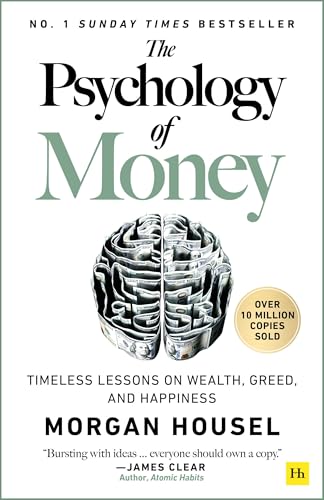
by Morgan Housel · 2020
Timeless lessons on wealth, greed, and happiness — exploring why smart people make irrational financial decisions and how behavior matters more than knowledge.
The landmark study revealing that most American millionaires are ordinary people who live in ordinary houses and build wealth below their means.
As an Amazon Associate I earn from qualifying purchases.