Finance 8 min read
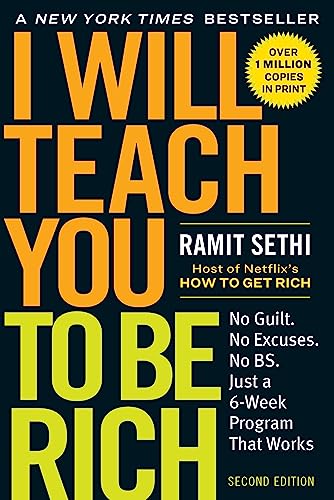
I Will Teach You to Be Rich
by Ramit Sethi · 2019
4.6
A no-guilt personal finance system for your 20s and 30s: automate savings and investing, spend on what you love, and cut everything else.

Amazon Associate link
by Robert T. Kiyosaki · 1997
Rich Dad Poor Dad is built around a simple but radical contrast: Robert Kiyosaki had two father figures growing up — his educated but financially struggling biological father (“poor dad”) and his best friend’s entrepreneurial, self-made father (“rich dad”). The book argues that the rich operate on fundamentally different financial principles than the middle class, and that schools teach almost none of what actually creates wealth. The central lesson: the rich don’t work for money — they make money work for them.
Most people follow the same script: go to school, get a good job, earn a salary, pay bills, repeat. Kiyosaki calls this the Rat Race — a cycle where people work harder to earn more, spend more to reward themselves, and end up with nothing to show for it. No matter how fast you run, the treadmill keeps pace.
The rich, by contrast, use money differently. They don’t accumulate paychecks; they accumulate assets that generate income. The goal is not a higher salary — it’s building systems where money flows in whether you’re working or not. The moment your passive income exceeds your expenses, you’re financially free. Most people never ask “how can money work for me?” They only ask “how can I earn more?”
This is the core of the entire book, and Kiyosaki makes it disarmingly simple. An asset puts money in your pocket. A liability takes money out of your pocket. That’s it.
The rich buy assets. The poor and middle class buy liabilities — and then convince themselves those liabilities are assets. The most common example: a home. Most people call their home their greatest asset. Kiyosaki calls it a liability, because it consistently takes money out of your pocket through mortgage payments, property taxes, maintenance, and insurance. It only becomes an asset if it generates income — such as by being rented out.
True assets include: rental real estate, stocks and dividends, businesses that run without you, royalties, and anything else that generates cash flow. The game is simple: build your asset column. The bigger it grows, the less you depend on a paycheck.
Poor people and the middle class follow a predictable spending sequence: they get paid, pay their bills, and spend whatever is left. The rich invert this sequence entirely: they get paid, invest in assets first, and live on what remains — including, eventually, the income those assets generate.
This is why, Kiyosaki argues, you see poor people buying new shoes and rich people buying apartment buildings. The poor buy luxuries first. The rich buy luxuries last — and when they do, they buy them with the income from their assets, not their labor. The Ferrari is paid for by the rental properties, not the salary.
Understanding these three categories is the foundation of financial intelligence:
Ordinary earned income is what most people have: wages and salaries from employment. It’s also the most heavily taxed form of income. You trade time for money, and when you stop working, the income stops.
Passive income comes from assets — real estate rentals, royalties, businesses you own but don’t manage day-to-day. This is where financial freedom lives. Your money works while you sleep.
Portfolio income comes from paper assets — gains from stocks, bonds, and other investments. Combined with passive income, this is how wealthy people continue to grow their wealth without exchanging more hours of their life.
Rich dad’s constant lesson: learn to convert earned income into passive and portfolio income. Every dollar you save and invest is a step toward buying back your time.
One of the book’s most counterintuitive arguments: don’t take jobs primarily for the paycheck. Take jobs that teach you skills you can use to build wealth. Kiyosaki deliberately worked in sales, management, and marketing early in his career — not because these were the highest-paying roles, but because they taught him skills that would serve him when building his own businesses and investing.
The wealthy view their career as an education. The financially struggling view it as a source of income. Both are right — but only one leads to financial independence.
Kiyosaki argues that the biggest reason people struggle financially isn’t lack of talent or effort — it’s financial illiteracy. Schools teach reading, math, and science, but they don’t teach how money works, how taxes function, how to read a financial statement, or what differentiates an asset from a liability.
Financial intelligence includes four key skills: accounting (understanding numbers and financial statements), investing (the science of making money work), market understanding (supply and demand), and the law (knowing how to use tax advantages and corporate structures legally to protect wealth).
Most people spend their careers building their employer’s business. Kiyosaki’s advice: keep your day job if you need it, but dedicate your spare time and income to building your own asset column. This doesn’t necessarily mean starting a company. It means acquiring assets — real estate, stocks, side businesses — that belong to you, not your employer.
The distinction between your profession and your business is critical. Your profession is how you earn money today. Your business is how you build wealth for life.
This is a chapter that surprises many readers. The wealthy use legal corporate structures to reduce their tax burden — something employees can’t access as easily. A business owner can deduct expenses before paying taxes; an employee pays taxes first, then lives on what’s left.
Kiyosaki is not advocating anything illegal. He’s pointing out that the tax code was written by and for people who own businesses and invest in assets. The more financially literate you become, the more you can use the same tools.
Kiyosaki identifies five mental obstacles that keep people from building wealth even when they have the knowledge:
Fear — specifically, the fear of losing money. Everyone who has ever gotten rich has also lost money. The difference is that the rich learn from it and keep going. Cynicism — listening to the crowd, the critics, and the “what ifs” instead of taking action. Laziness — often disguised as being “too busy.” The busiest people can be the laziest when it comes to building their own financial life. Bad habits — paying yourself last instead of first. Arrogance — the belief that what you don’t know doesn’t matter.
“The poor and the middle class work for money. The rich have money work for them.”
“It’s not how much money you make, but how much money you keep, how hard it works for you, and how many generations you keep it for.”
“An asset puts money in my pocket. A liability takes money out of my pocket.”
“The single most powerful asset we all have is our mind. If it is trained well, it can create enormous wealth.”
Rich Dad Poor Dad is best suited for people who are in their early career — or who are re-examining their relationship with money for the first time. It’s particularly valuable for anyone who grew up in a household where money was never discussed, or who has been following the “go to school, get a job, save a little” script without questioning it.
It’s not a technical investment guide and it won’t teach you how to pick stocks or evaluate real estate deals. What it will do — and what very few books do — is fundamentally change how you think about money, assets, income, and financial freedom. That shift in perspective is the real product.
What is Rich Dad Poor Dad about? It’s about the financial education the school system never provided — specifically, the difference between how the wealthy and the middle class think about and use money. It argues that building assets, not earning salaries, is the path to financial freedom.
What is the main lesson of Rich Dad Poor Dad? That financial literacy — understanding assets, liabilities, cash flow, and passive income — is the foundation of wealth. The rich build asset columns that generate income without labor; the middle class work for earned income and spend it on liabilities.
Is Rich Dad Poor Dad worth reading? It’s the #1 personal finance book of all time by sales and cultural influence, with over 40 million copies sold in 109 countries. Whether or not you agree with every argument, the asset-vs-liability framework alone is worth the read for anyone thinking about their financial future.
What is the difference between Rich Dad and Poor Dad? Poor dad believed in education, job security, and working for a good salary. Rich dad believed in financial education, building assets, and making money work for him. Both were intelligent men — they simply had fundamentally different beliefs about money.
Ready for the full experience?
Buy on Amazon →As an Amazon Associate I earn from qualifying purchases.
by Ramit Sethi · 2019
A no-guilt personal finance system for your 20s and 30s: automate savings and investing, spend on what you love, and cut everything else.

by Benjamin Graham · 1949
The foundational text of value investing: why Wall Street's formulas fail, and why margin of safety — not forecasting — protects your money.
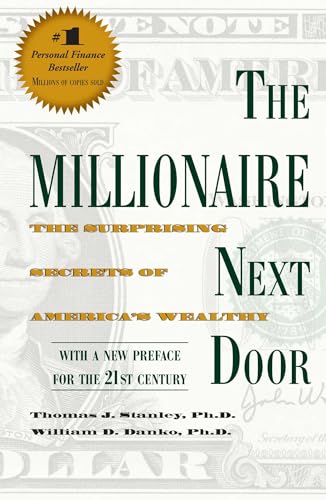
by Thomas J. Stanley & William D. Danko · 1996
The landmark study revealing that most American millionaires are ordinary people who live in ordinary houses and build wealth below their means.
What the rich teach their kids about money that the poor and middle class do not — the financial education the school system never provided.
As an Amazon Associate I earn from qualifying purchases.