Finance 8 min read
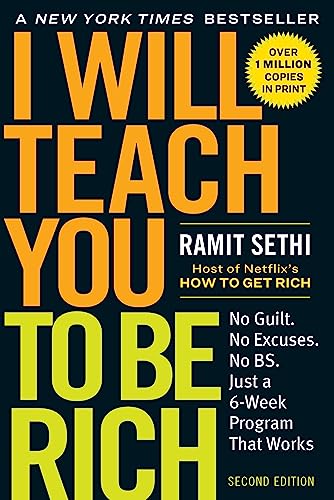
I Will Teach You to Be Rich
by Ramit Sethi · 2019
4.6
A no-guilt personal finance system for your 20s and 30s: automate savings and investing, spend on what you love, and cut everything else.
Amazon Associate link
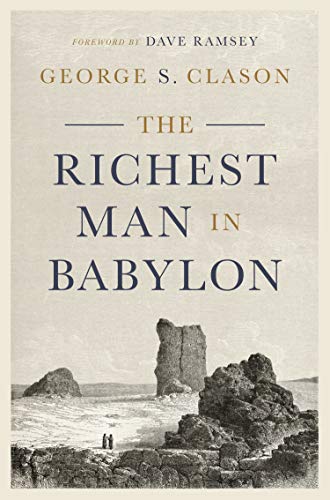
by George S. Clason · 1926
First published in 1926, The Richest Man in Babylon is perhaps the most enduring book ever written on personal finance. Yet it reads nothing like a finance book. Through a series of parables set in ancient Babylon — the wealthiest city of its age — George S. Clason delivers one insight that has never lost its power: the rules of money have not changed in 4,000 years, and the people who follow them always prosper.
At the heart of the book is one deceptively simple truth: a part of all you earn is yours to keep. From that seed grows everything else — wealth, security, freedom. The remarkable thing is that Clason’s ancient Babylonians figured this out long before banks, stock markets, or retirement accounts existed. The principles work just as well today.
Bansir, a chariot builder, and Kobbi, a musician, are both skilled craftsmen who have worked hard their entire lives — yet both are broke. They seek out their childhood friend Arkad, now the richest man in Babylon, and ask how he did it.
Arkad’s answer comes directly from his own mentor, the moneylender Algamish: “I found the road to wealth when I decided that a part of all I earned was mine to keep.”
Not one-tenth after expenses. Not whatever is left over at the end of the month. One-tenth first, before anything else is spent. This is the principle that changes everything.
Arkad put this to work as a young scribe earning modest wages. He began keeping one coin of every ten he earned — not spending it, not lending it, just keeping it. He noticed something strange almost immediately: he didn’t miss the tenth coin. His lifestyle adjusted. His remaining nine-tenths still covered his needs. But now, for the first time in his life, his purse was growing.
“For every ten coins thou placest within thy purse take out for use but nine. Thy purse will start to fatten at once and its increasing weight will feel good in thy hand and bring satisfaction to thy soul.”
The Babylonians called this “starting thy purse to fattening.” We call it paying yourself first. Either way, it is the non-negotiable foundation of all wealth.
When King Sargon of Babylon discovered that most of his citizens were poor despite living in the wealthiest city in the world, he summoned Arkad and asked him to teach the secrets of wealth to the people. Arkad addressed a class of one hundred men over seven days — one cure per day.
Cure 1 — Start thy purse to fattening. Save at least one-tenth of everything you earn, every time, without exception. This is the habit from which all wealth springs.
Cure 2 — Control thy expenditures. Your lifestyle will always expand to fill your income unless you deliberately stop it. The solution isn’t to earn more — it’s to distinguish between needs and desires, then build a budget that honors your savings goal first. As Arkad put it: what we call “necessary expenses” will always grow to equal our incomes unless we say otherwise.
Cure 3 — Make thy gold multiply. Savings sitting idle earn nothing. Put your money to work. Arkad’s first successful investment was a loan to a shieldmaker who paid him rental on the capital. Over decades, this income compounded into extraordinary wealth. The third cure introduces the concept Clason calls “an army of golden slaves” — money that works for you day and night so you don’t have to.
Cure 4 — Guard thy treasures from loss. The principal is sacred. Before any investment, ask: is my money safe here? The temptation to chase high returns is constant, but the penalty of losing your principal is devastating. Arkad’s own first loss came from entrusting his savings to a brickmaker to buy jewels — a man who knew nothing about jewels. “Seek the advice of those whose daily work is handling money,” he warned. A safe, modest return beats a risky high one every time.
Cure 5 — Make of thy dwelling a profitable investment. Own your home. The rent you pay a landlord could instead build equity in property you own. Homeownership reduces monthly costs, builds long-term wealth, and gives your family stability. Even in ancient Babylon, moneylenders were willing to finance homes for those who could show good faith with a portion of the purchase price.
Cure 6 — Insure a future income. Provide in advance for the years when you are no longer able to earn. A small amount saved consistently — week after week, year after year — compounds into a substantial nest egg that will sustain you in old age and protect your family if you die prematurely. Clason even foresaw the concept of life insurance, imagining a system where many people pool small contributions so that the family of any member who dies receives a significant sum.
Cure 7 — Increase thy ability to earn. The most overlooked of the seven cures. Cultivate your skills, deepen your expertise, and seek to become more valuable in your work. Arkad himself started as a humble scribe, but by studying harder and working more diligently than anyone around him, he earned promotions, gained the attention of wealthy mentors, and created opportunities that led to his fortune. Desire must be definite — not a vague wish to “be rich,” but a specific goal pursued with specific effort.
In one of the book’s most powerful chapters, a wealthy caravan leader named Kalabab tells his workers the story of Nomasir, Arkad’s son. When Nomasir came of age, Arkad gave him two things: a bag of gold, and a clay tablet inscribed with the Five Laws of Gold. He told his son to go make his own fortune and return in ten years.
Nomasir lost the gold almost immediately — first to a horse-race scheme, then to a dishonest business partner. Broke and humiliated, he reread the clay tablet his father had given him. He started over from scratch, followed the laws faithfully, and returned ten years later with three bags of gold — repaying his father’s bag and adding two more as proof that wisdom is worth far more than gold itself.
The Five Laws of Gold, as engraved on the tablet:
Law I. Gold comes readily and in increasing quantity to any man who puts aside not less than one-tenth of his earnings to build an estate for his future and his family.
Law II. Gold labors diligently for the wise owner who finds profitable employment for it — multiplying like the flocks in a field.
Law III. Gold clings to the cautious owner who invests it under the advice of people wise in handling it.
Law IV. Gold slips away from the man who invests it in businesses or ventures with which he is unfamiliar, or which are not approved by those skilled in its management.
Law V. Gold flees the man who forces it toward impossible returns, who follows the advice of tricksters, or who trusts his own inexperience and wishful thinking over sound judgment.
The pattern is unmistakable: save consistently, invest wisely, protect the principal, seek expert counsel, and avoid get-rich-quick schemes. “Wealth that comes quickly goeth the same way,” Kalabab tells his men. “Wealth that stayeth to give enjoyment comes gradually, because it is a child born of knowledge and persistent purpose.”
In the chapter “Meet the Goddess of Good Luck,” Arkad leads a discussion at Babylon’s Temple of Learning on whether luck can be attracted or created. Men share stories of opportunities they almost seized but didn’t — the land investment passed up for new robes, the flock of sheep not bought because payment wasn’t made that night.
The conclusion is sharp: good luck is not random. It comes to those who act when opportunity appears. The enemy of good luck has a name: procrastination. A Syrian in the audience cuts to the truth bluntly: every story shared is a story of the same mistake — a man who hesitated when he should have decided.
Arkad summarizes it this way: “Good luck can be enticed by accepting opportunity. Those eager to grasp opportunities for their betterment attract the interest of the good goddess. Men of action please her best.”
The chapter on Mathon, the gold lender, adds a crucial dimension often missed in summaries of this book: not all borrowing or lending is wise. When Rodan the spearmaker receives fifty gold pieces as a royal gift and is immediately pressured by his sister to lend it to her husband, he seeks Mathon’s counsel.
Mathon shows Rodan his token chest — one token from every borrower, representing a living record of human nature. Some tokens sit unclaimed because the borrower died. Some belong to people who repaid promptly. Many belong to those who borrowed on emotion and wishful thinking, who could never repay.
His advice to Rodan distills the lender’s wisdom into a principle that applies equally to the investor: “Better a little caution than a great regret.” Lend only where there is genuine security or proven earning capacity. Do not let sentiment override judgment. And above all, do not risk the savings of years on the ambition of someone who has no experience in making money work.
One of the book’s most resonant parables involves old Banzar, a soldier guarding Babylon’s walls during a siege. Citizens — a trembling merchant, a mother with a sick husband, a frightened child — each come to him asking if they will be safe. His answer, repeated to each one with calm conviction: “The walls of Babylon will protect you.”
Clason makes the moral explicit: the Babylonians built their walls to protect everything they had worked for. We have our own walls today — insurance, savings accounts, diversified investments. The lesson is that protection is not optional. It must be built before it is needed, because when the enemy arrives, it is too late to build.
Everyone who earns money. Literally. The genius of The Richest Man in Babylon is that its principles are so simple that a teenager can understand them and so powerful that a seasoned investor still benefits from being reminded of them. The parable format makes abstract financial concepts feel human and memorable — you don’t remember a rule, you remember Arkad’s voice, Nomasir’s mistakes, Mathon’s token chest.
If you’ve never read a personal finance book, this is the best place to start. If you’ve read dozens, this is the one worth reading again.
The richest man in Babylon was not smarter than his neighbors, nor born into privilege, nor blessed with exceptional luck. He simply learned one rule early, applied it consistently for decades, and never stopped teaching it to others.
A part of all you earn is yours to keep.
Save the tenth. Let it work. Guard it with wisdom. Build the walls before you need them. The principles are ancient. The results are as modern as your next paycheck.
“Wealth that stayeth to give enjoyment and satisfaction to its owner comes gradually, because it is a child born of knowledge and persistent purpose.” — George S. Clason
Ready for the full experience?
Buy on Amazon →As an Amazon Associate I earn from qualifying purchases.
by Ramit Sethi · 2019
A no-guilt personal finance system for your 20s and 30s: automate savings and investing, spend on what you love, and cut everything else.

by Benjamin Graham · 1949
The foundational text of value investing: why Wall Street's formulas fail, and why margin of safety — not forecasting — protects your money.
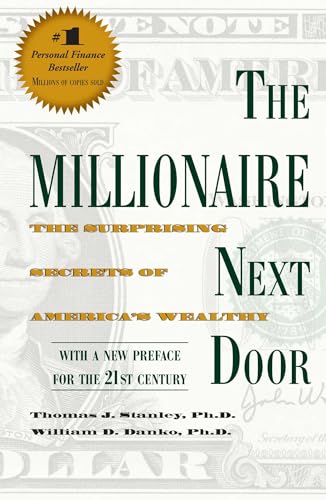
by Thomas J. Stanley & William D. Danko · 1996
The landmark study revealing that most American millionaires are ordinary people who live in ordinary houses and build wealth below their means.
Ancient Babylonian parables reveal timeless rules of personal finance: seven cures for an empty wallet, five laws of gold, and the habit of the wealthy.
As an Amazon Associate I earn from qualifying purchases.