Finance 8 min read
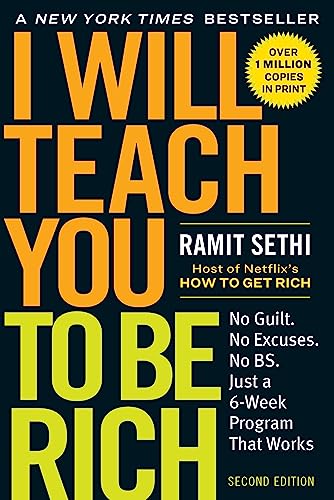
I Will Teach You to Be Rich
by Ramit Sethi · 2019
4.6
A no-guilt personal finance system for your 20s and 30s: automate savings and investing, spend on what you love, and cut everything else.
Amazon Associate link
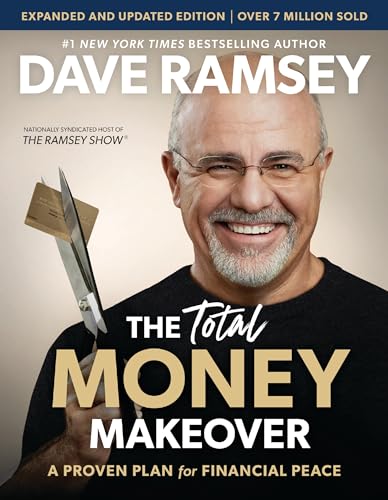
by Dave Ramsey · 2003
Dave Ramsey went bankrupt at 26 after building a $4 million real estate empire on borrowed money. After losing everything, he spent years studying how ordinary people actually build lasting wealth — and discovered the answer wasn’t complicated: live on less than you make, eliminate debt aggressively, and invest consistently over time. The Total Money Makeover is not a theory book. It’s a seven-step action plan built on one core insight: personal finance is 80% behavior and only 20% knowledge. You probably already know what to do. This book forces you to actually do it.
Ramsey’s central argument is uncomfortable: your financial situation is almost entirely your own fault — and therefore entirely within your power to fix. It is not the economy, your employer, your credit score, or your circumstances. It is the decisions you have made, the myths you have believed, and the behaviors you have refused to change.
This isn’t cruelty. It’s empowerment. The moment you accept that you are the problem, you also accept that you are the solution. Ramsey rebuilt his own finances from zero twice — once through luck and borrowed money, which collapsed; the second time through discipline and the principles in this book, which stuck. The difference between the two was entirely behavioral.
Most people are in financial denial. They earn decent salaries, carry manageable debts, make minimum payments on time, and genuinely believe they are fine. They are not fine — they just haven’t been tested yet. Ramsey uses a vivid analogy: when you are physically overweight, the mirror doesn’t let you lie. When you are financially overweight, you can look perfectly fine until a layoff, a medical bill, or a divorce arrives and suddenly there is no floor beneath you.
The frog-in-boiling-water metaphor applies here perfectly. Financial mediocrity sneaks up slowly — one car payment at a time, one zero-balance transfer at a time — until the gradual accumulation of “normal” debt becomes a crisis. The cure starts with a brutally honest look at where you actually stand.
American culture has been sold the idea that debt is how you get things, build credit, and create wealth. Ramsey spends several chapters systematically dismantling this lie. His key points:
The heart of the book is a sequential seven-step framework that Ramsey has refined through working with millions of families. The steps must be done in order. Skipping ahead undermines the behavioral logic:
Baby Step 1 — Save $1,000 Fast Before anything else, build a small emergency fund of exactly $1,000. This is your shield against the small crises (car repair, medical copay, appliance breakdown) that would otherwise send you back to debt the moment you start paying it off. It’s not enough to feel safe — it’s enough to break the cycle of borrowing for emergencies.
Baby Step 2 — The Debt Snowball List every debt you have except the home mortgage, from smallest balance to largest balance, regardless of interest rate. Pay minimums on everything. Then attack the smallest debt with every extra dollar you can find — side jobs, sold items, cut expenses. When it’s gone, roll that payment into the next. The psychological wins of eliminating debts one by one create momentum that the mathematically optimal approach (highest interest first) rarely produces. Behavior beats math.
Baby Step 3 — Full Emergency Fund (3–6 Months of Expenses) Now that you’re debt-free (except the house), build a real emergency fund. Three to six months of household expenses held in a liquid savings account. This is the difference between an emergency being an inconvenience and being a catastrophe. Ramsey recounts story after story of people who were financially destroyed not by bad decisions but by having nothing to absorb a single unexpected event.
Baby Step 4 — Invest 15% for Retirement Invest 15% of your gross household income in retirement accounts. Start with your employer’s 401(k) up to any match (that’s a 100% return on your money — never leave it on the table), then fund a Roth IRA to the annual limit, then back to the 401(k). Ramsey recommends growth stock mutual funds spread across four categories: growth, growth and income, aggressive growth, and international. He cites historical S&P 500 averages of around 12% annually over the long term.
Baby Step 5 — College Funding If you have children, begin funding their education using Education Savings Accounts (ESA) or 529 plans. The order matters: your retirement comes first. You can borrow for college; you cannot borrow for retirement.
Baby Step 6 — Pay Off the Home Mortgage With retirement funded and college in progress, put every extra dollar toward paying off the mortgage early. Owning your home outright eliminates your largest expense and dramatically reduces the amount of income you need each month — which transforms what retirement actually looks like.
Baby Step 7 — Build Wealth and Give With zero debt, a full emergency fund, retirement on track, and a paid-off home, you are financially free. Now invest aggressively, build wealth like crazy, and give with unprecedented generosity. This is the finish line — and Ramsey describes it as the most fun you’ll ever have with money.
Ramsey uses the image of a gazelle being chased by a cheetah. The gazelle doesn’t jog. It doesn’t pace itself. It runs for its life with total, single-minded focus until the threat is gone. That is how he says you should attack debt.
This means temporarily living dramatically below your means. Cutting subscriptions, selling things, taking extra work, saying no to vacations and restaurant meals and new clothes. Not forever — just until the debt is gone. The sacrifice is temporary. The financial freedom is permanent. As Ramsey’s motto states: If you will live like no one else, later you can live like no one else.
Every dollar must be assigned a job before the month begins. Ramsey calls this a “zero-based budget” — income minus outgo equals zero. This doesn’t mean spending everything; it means intentionally directing every dollar, including savings and investments. If you don’t control your money, it disappears without explanation. The budget is the mechanism that turns intentions into results.
He recommends the envelope system for variable spending categories: food, clothing, entertainment, gas. You put cash in envelopes and when the cash is gone, spending in that category stops. The physical nature of cash creates a friction that credit cards eliminate — and that friction is a feature, not a bug.
Ramsey is emphatic about avoiding cash value life insurance (whole life, universal life, variable life). These products combine insurance with savings at terrible returns — averaging 2.6% to 7.4% annually, far below what you’d earn elsewhere. He recommends term life insurance (20-year level term) for 10–12 times your annual income, while you’re in debt-elimination mode. By the time the term expires, you should have enough in investments to be self-insured.
He also covers long-term disability insurance (your ability to earn income is your most valuable asset), health insurance (never go without it), and long-term care insurance (for those approaching retirement).
The most radical claim in the book — and the one most backed up by Ramsey’s experience counseling thousands of families — is that financial knowledge is almost irrelevant compared to financial behavior. People know they shouldn’t carry credit card debt. They do it anyway. People know they should save for emergencies. They don’t. The information is freely available. The execution is the hard part.
The book is structured around this insight: every step is designed to generate a small behavioral win that builds momentum for the next. The Debt Snowball prioritizes psychology over math. The $1,000 starter fund builds confidence before the hard work begins. The progressive nature of the Baby Steps prevents overwhelm. This is personal finance designed for how humans actually function — not how they theoretically should.
“Winning at money is 80 percent behavior and 20 percent head knowledge.”
“If you will live like no one else, later you can live like no one else.”
“Debt is not a tool; it is a method to make banks wealthy, not you.”
“The borrower is slave to the lender.”
“Your largest wealth-building asset is your income. When you tie up your income in payments, you lose.”
This book is for anyone who is living paycheck to paycheck, carrying consumer debt, or simply not making meaningful progress toward financial freedom despite earning a reasonable income. It’s particularly powerful for people who have tried to “manage” debt rather than eliminate it, who have consolidated loans that grew back, or who feel like financial security is perpetually just out of reach.
It is not for people seeking sophisticated investment theory, tax optimization strategies, or advanced wealth management. Ramsey himself acknowledges the book is simple — deliberately so. The simplicity is the point. Complexity is the enemy of execution, and execution is the only thing that actually changes your financial life.
If you’ve ever thought “I make decent money, so why am I still broke?” — this book was written for you.
What are the 7 Baby Steps in The Total Money Makeover? The 7 Baby Steps are: (1) Save $1,000 emergency fund, (2) Pay off all debt using the Debt Snowball, (3) Build a 3–6 month emergency fund, (4) Invest 15% of income for retirement, (5) Save for children’s college, (6) Pay off your home early, and (7) Build wealth and give generously. They must be followed in order for maximum behavioral impact.
What is the Debt Snowball method? The Debt Snowball is Ramsey’s debt-elimination strategy: list all debts from smallest to largest balance, pay minimums on all, and attack the smallest with every extra dollar. When it’s paid off, roll that payment to the next debt. The method prioritizes psychological momentum over interest-rate math, and that momentum is what keeps people going.
Is The Total Money Makeover worth reading? It has over 22,000 reviews on Amazon with a 4.7 rating, has sold millions of copies, and is one of the most frequently cited books by people who have dramatically turned around their finances. Whether or not you agree with every position Ramsey takes, the 7-step framework has a strong track record of producing real results for ordinary families.
Does Dave Ramsey’s plan really work? For people who follow it completely, yes — the evidence from hundreds of thousands of documented “debt-free screams” on Ramsey’s radio show and podcast suggests the system works when executed with consistency. The main criticism is that the plan is very aggressive and leaves little room for nuance, which is also part of why it works for people who have tried more moderate approaches and failed.
Ready for the full experience?
Buy on Amazon →As an Amazon Associate I earn from qualifying purchases.
by Ramit Sethi · 2019
A no-guilt personal finance system for your 20s and 30s: automate savings and investing, spend on what you love, and cut everything else.

by Benjamin Graham · 1949
The foundational text of value investing: why Wall Street's formulas fail, and why margin of safety — not forecasting — protects your money.
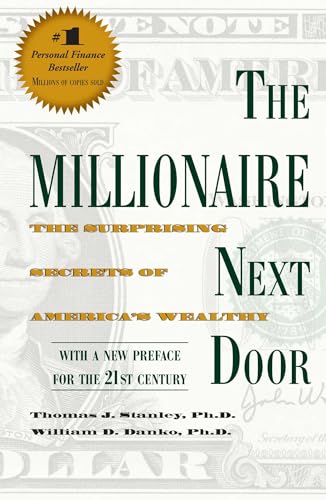
by Thomas J. Stanley & William D. Danko · 1996
The landmark study revealing that most American millionaires are ordinary people who live in ordinary houses and build wealth below their means.
A no-nonsense, step-by-step plan to get out of debt, build an emergency fund, and create lasting wealth — based on behavior change, not financial theory.
As an Amazon Associate I earn from qualifying purchases.